Core care
Light
Bright Indirect
Keep it near a bright window. Avoid harsh midday sun.
Tolerated
Preferred

Ficus cyathistipula
Also known as: Birchbark Fig, African Fig Tree
What often trips people up is moisture, not effort: give African Fig bright indirect light and water when the top layer has dried.
What We Think
Surprisingly, African Fig is less about doing more and more about avoiding one repeat mistake. A common mistake with African Fig is treating it like a humidity-loving tropical; stale damp air usually causes more trouble than dry air. If growth stalls, checking root-zone moisture and airflow together is usually more useful than adding fertilizer first.

Core care
Keep it near a bright window. Avoid harsh midday sun.
Water every 7-14 days. Let top 2-5 cm (0.8-2 in) dry first. Adjust for season and light.
One thing to watch for is heavy mix breakdown; All Purpose, Perlite should still drain cleanly after watering.
African Fig is very forgiving and easy to manage. It tolerates inconsistent care and adapts to a wide range of indoor conditions.
Safety
Maintenance
One thing to watch for is feeding on autopilot. A practical check: dial it back when growth visibly slows. African Fig often follows a 12-24 day feeding rhythm, with seasonal adjustments.
In practice, wipe foliage gently when dust builds up so leaves can keep working efficiently.
In practice, as-needed pruning keeps shape and energy where you want it.
Environment
Keep temperatures steady and protect from sharp swings, frost, and direct heat blasts.
In practice, dry indoor air is usually fine; prolonged dampness is the bigger risk.
African Fig is native to tropical regions of Africa, with cultivation traits that closely mirror conditions in that range. Natural populations persist in warm understory or open tropical habitats with seasonal rainfall, and growers usually identify it by its glossy leaves. In practice, by the 20th century, growers had introduced this species far beyond its native range through ornamental and practical cultivation. Its ongoing popularity in houseplant culture comes from dependable growth and flexible placement across many interior styles. In practice, it remains a dependable choice for growers who want clear structure, stable performance, and a distinctive visual identity.
Also known as "the river's gift" because its seeds are buoyant and often spread via African waterways.
Its trunk develops a decorative, peeling bark as it matures, earning it the name "Birchbark Fig".
It produces small, ornamental fruit that starts green and turns yellow-red as it matures.

What often trips people up is inconsistency; this one responds best to repeatable care. The foundations for African Fig are reliable light, good drainage, and small seasonal adjustments. African Fig is a perennial plant, so care gets easier once you spot its active and resting phases. Expect a medium pace for African Fig, so progress shows up as stronger foliage and steadier flowering rather than sudden bursts. Once African Fig's rhythm clicks, care becomes more predictable and more rewarding.
In practice, African Fig responds best when light is both bright enough and consistent day to day. In practice, 1000-8000 lux is a dependable intensity range to start from. Start there with African Fig, then refine if foliage color or bloom performance drifts. African Fig can also handle Low, Medium conditions, but think of that as a buffer rather than the daily target. If African Fig starts stretching or flowering less, the first adjustment should usually be a brighter placement rather than more water or fertilizer. Indoors, African Fig often does best near a bright window with softened light to avoid leaf scorch. If conditions drift, revisit light requirements before changing multiple variables at once.
In practice, a moderate wet-dry cycle works best: lightly dry top layer, then water thoroughly. A practical watering baseline for African Fig is every 7-14 days, then tune by dry-down speed. It is generally tolerant of tap water. This is where things can go wrong with African Fig: roots need oxygen as much as they need water. If you are using the top dry method for African Fig, water thoroughly, then let excess drain completely. African Fig water storage category is low, so avoid forcing constant moisture when it handles a wet-dry rhythm better. When African Fig enters dormancy, cut watering back so the resting plant is not left in moisture it no longer needs. None If conditions drift, revisit how often to water before changing multiple variables at once.
One thing to watch for is heavy mix breakdown; All Purpose, Perlite should still drain cleanly after watering. Aim for African Fig soil pH around 6.0-7.5. A loose, airy structure is especially helpful for African Fig because it gives the roots oxygen and lowers the risk of rot after rain or watering. Repot African Fig Every 2-3 years or when roots crowd out the pot, the mix collapses, or drainage slows down. African Fig root aggression is generally high, which helps estimate how quickly the root zone can outgrow its container or bed. One thing to watch for is compacted old mix around the root core after transplanting. If conditions drift, revisit best soil for before changing multiple variables at once.
African Fig is most often grown indoors, where stable light and watering are easier to maintain. In practice, moving African Fig less often helps leaves adapt and stay more consistent.
One thing to watch for is feeding on autopilot. A practical check: dial it back when growth visibly slows. African Fig often follows a 12-24 day feeding rhythm, with seasonal adjustments. In practice, wipe foliage gently when dust builds up so leaves can keep working efficiently. In practice, as-needed pruning keeps shape and energy where you want it. A practical African Fig cleaning rhythm is monthly, adjusted for dust, rain splash, and pest pressure. These African Fig maintenance jobs work together: feeding drives new growth, cleanup lowers disease pressure, and pruning redirects energy to healthy tissue.
Keep temperatures steady and protect from sharp swings, frost, and direct heat blasts. In practice, think of hardiness around 12-35°C, or USDA Zone 10-12. In practice, dry indoor air is usually fine; prolonged dampness is the bigger risk. African Fig draft tolerance is low; avoid placing it where repeated hot/cold gusts hit leaves directly. Average room conditions usually work for African Fig when air movement stays decent and roots are not constantly wet. In practice, African Fig responds better to consistency than perfection; keep swings small and responses are much better. If conditions drift, revisit temperature and humidity before changing multiple variables at once.
African Fig is considered Toxic for pets and Mildly Toxic for humans. That means African Fig placement matters just as much as care, especially if curious pets or children can reach leaves, blooms, bulbs, or corms. Wear gloves if you are sensitive to sap or handling African Fig regularly, and wash hands after pruning or dividing. If accidental ingestion of African Fig happens or irritation develops, contact a vet or medical professional promptly and bring the plant name with you.
African Fig has a medium growth habit and typically reaches about 250 cm (8.2 ft) tall and 150 cm (4.9 ft) wide. In practice, expect a self-standing form once conditions stay consistent. Use this to plan African Fig support, spacing, and overall display. African Fig flowering usually happens in Never, often with None blooms, so this is the period when good light and timely feeding are most rewarding. Dormancy is a normal part of African Fig's cycle: None. The key is to treat that slowdown as rest, not as a sign that African Fig needs more water or fertilizer. Once you understand African Fig's rhythm, it becomes much easier to tell the difference between a true problem and a healthy seasonal change.
Practice with bite-sized quizzes to remember African Fig care basics faster in the Plantology app.
Diagnose African Fig symptoms and get guided help with Plant Doctor in the Plantology app.
African Fig is commonly propagated by Stem Cutting. African Fig stem cuttings root more reliably when you include viable nodes and keep humidity stable.
African Fig is moderately difficult to propagate, mainly because timing and stable conditions matter for consistent rooting.
In practice, roots appear in 4-8 weeks. A practical check: needs bright light and consistent warmth throughout the propagation process.
In practice, sudden cold drafts on new cuttings will cause them to fail. In practice, ensure water for propagation is room temperature.
This species is one of the easier Ficus to root in plain water. In practice, refresh the water every few days to keep it oxygenated.
Use LeafSwipe to discover, compare, and save plants with care needs similar to African Fig in the Plantology app.
Track care schedules, troubleshoot issues faster, and discover more plants while you care for African Fig.
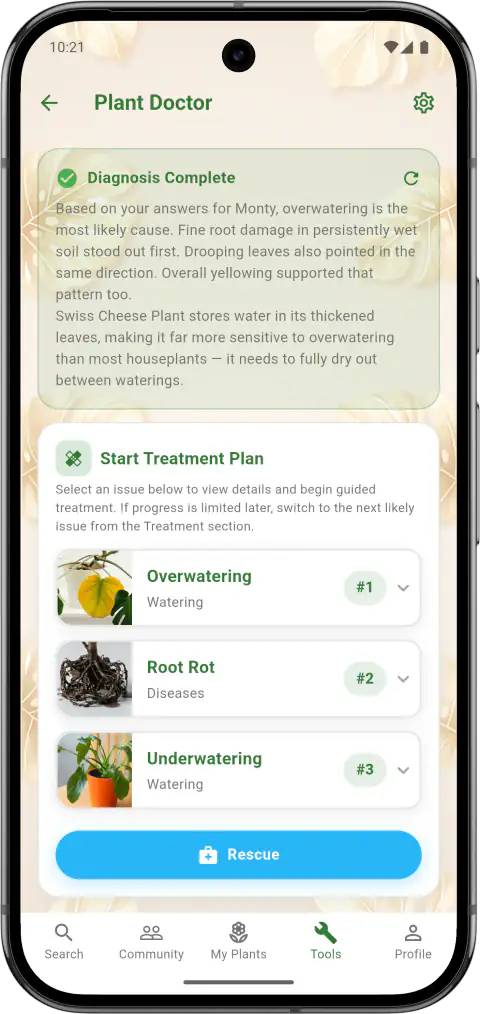
Diagnose pests, yellow leaves, root rot, and other common problems with step-by-step guidance that helps you act quickly.
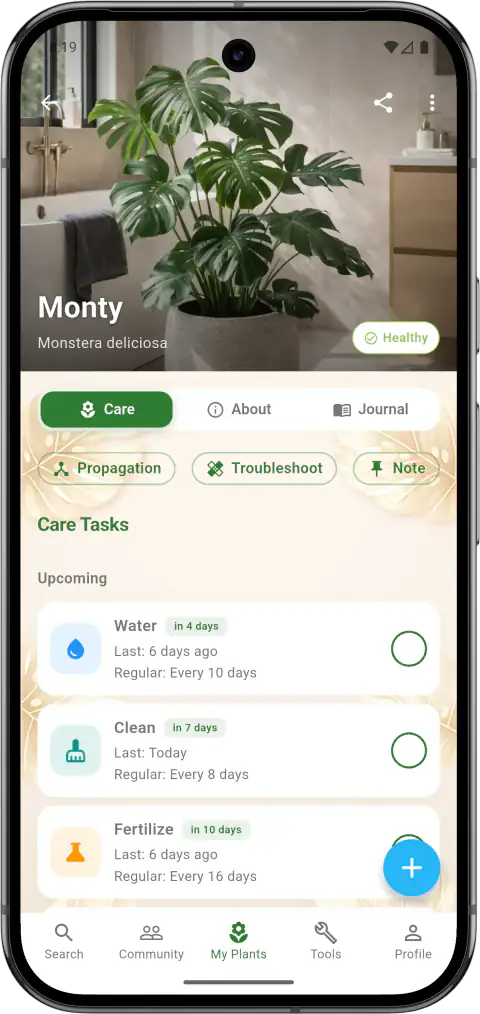
Track watering, fertilizing, repotting, and seasonal maintenance with reminders that keep your care routine consistent.
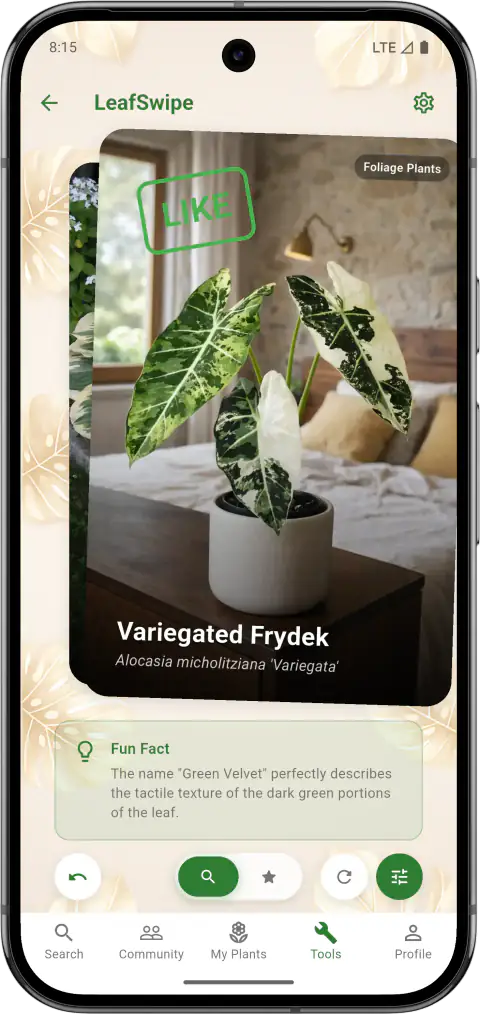
Discover new plants, compare care profiles, and save favorites when you want fresh ideas for your next addition.
African Fig yellowing usually points to watering imbalance, roots staying wet too long, or light that no longer matches African Fig's growth, so check soil moisture depth, root health, and placement before changing anything major.
African Fig drooping leaves usually follows abrupt stress such as roots drying too far, roots staying wet too long, or a sudden light or temperature shift, so inspect the root zone and any recent placement change first.
African Fig pale growth usually means the plant is not holding enough energy to maintain color, often because light is too weak or growth has outrun feeding and root support, so compare recent light levels with African Fig's watering rhythm and root space.
African Fig slow growth can be seasonal, but it is also worth checking usable light, root drainage, temperature, and whether the plant has outgrown its container before adding fertilizer.
African Fig grows best in Bright Indirect light and can tolerate low, medium conditions. Keep African Fig light consistent for stronger growth and flowering.
In practice, a moderate wet-dry cycle works best: lightly dry top layer, then water thoroughly. A practical watering baseline for African Fig is every 7-14 days, then tune by dry-down speed. It is generally tolerant of tap water. Adjust African Fig watering frequency to season, heat, and how fast the soil dries in your space.
African Fig is listed as Toxic for pets and Mildly Toxic for humans. Keep African Fig out of reach when ingestion is a concern.
African Fig does best in All Purpose, Perlite with a pH around 6.0-7.5. Fast drainage lowers root-rot risk.
Page-specific reference coverage is still being expanded across the catalog.
No plant-specific external reference is attached to this record yet. This guide is a structured editorial resource, not a claim of species-specific source coverage.
Read Plantology's editorial methodology and general reference set
Plantology
Stay on top of watering, diagnose problems faster, and keep discovering better ways to care for every plant you grow.