How much light do indoor plants need lux guide becomes more reliable when you use measurable ranges and repeatable routines instead of generic tips.
How Much Light Do Indoor Plants Need Lux Guide

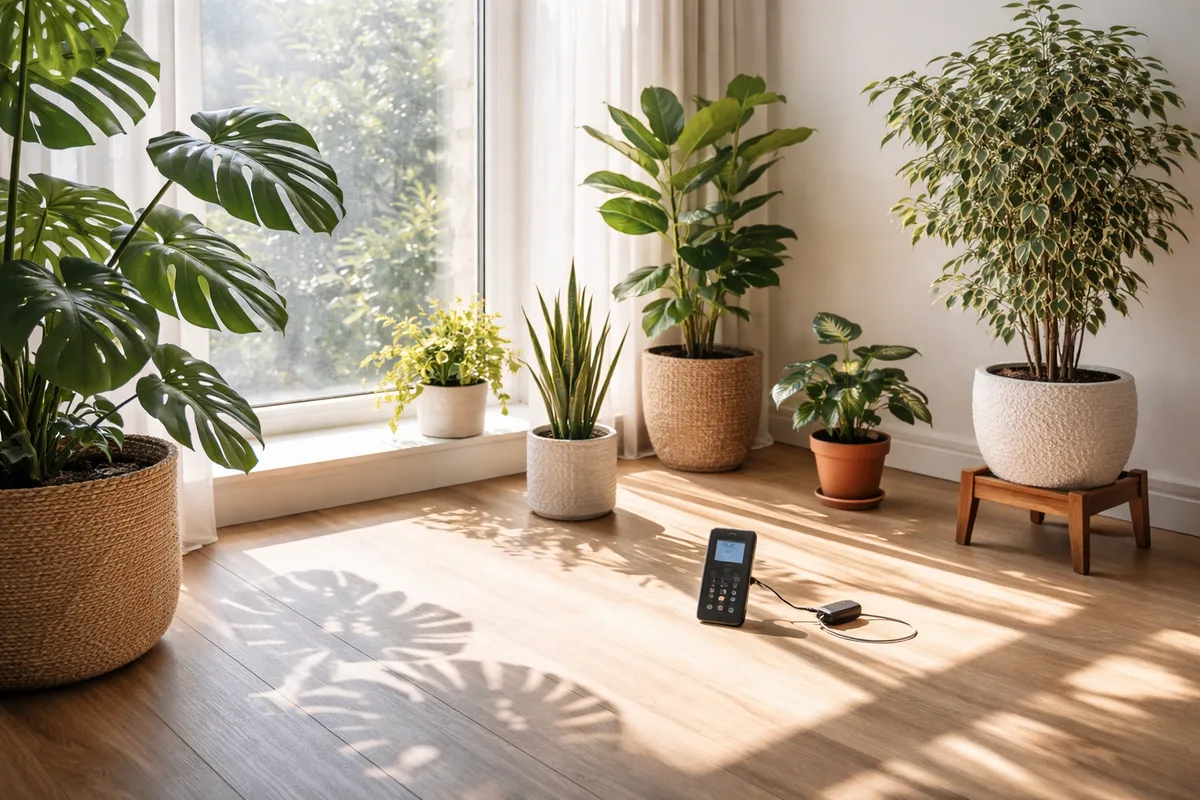
Quick Action Overview
At a glance: what to do first
Measure where leaves sit, not on the floor or window glass.
Use daytime ranges, not one single reading from one minute.
Match watering and feeding intensity to measured light band.
Recheck after seasonal sun angle shifts.
Core Explanation
How light exposure actually works
Light decisions are most reliable when you measure lux at leaf height, map daily ranges, and match species to bands.
Intensity (lux)
Lux tells you instantaneous brightness at the leaf plane and is the fastest way to classify indoor placement.
Duration
A plant in 1,200 lux for 10 hours can outperform short spikes of brighter but brief exposure.
Distance and shading
A move of 0.5 to 1 meter from a window can cut light dramatically in many rooms.
If symptoms overlap, compare why are my plant leaves turning yellow and overwatering plants before making multiple changes.
Step-By-Step System
Build a repeatable light exposure system
Step 1 - Capture baseline readings
Measure morning, noon, and afternoon at leaf height.
Target range: Use at least 3 readings over one bright day.
Step 2 - Assign a light band
Classify placement by typical range.
Target range: Low: 200 to 800 lux. Medium: 800 to 2,500 lux. Bright indirect: 2,500 to 6,000 lux.
Step 3 - Match species demand
Place low-light tolerant plants lower and high-demand growers higher.
Target range: Keep most foliage plants above roughly 800 lux for stable growth.
Step 4 - Tune care cadence
Adjust watering and feeding to the new band.
Target range: Higher lux usually shortens dry-down and can support tighter feeding intervals.
Why This Works
Why condition-based light exposure decisions are more reliable
Most light exposure problems come from timing mismatches, not effort. When routine and plant demand drift apart, stress builds before symptoms become obvious.
A condition-based approach lowers over-correction. You verify real signals first, then make one change at a time so results are easier to read.
This creates a repeatable system you can adapt through season changes without resetting your entire routine.
Key Variables
Use these variables as your control panel
Intensity (lux)
Lux tells you instantaneous brightness at the leaf plane and is the fastest way to classify indoor placement.
Duration
A plant in 1,200 lux for 10 hours can outperform short spikes of brighter but brief exposure.
Distance and shading
A move of 0.5 to 1 meter from a window can cut light dramatically in many rooms.
Common Mistakes
Errors that create avoidable stress
Window-label guessing
Direction labels alone ignore curtains, distance, and nearby shading.
Do this instead: Measure lux directly where leaves are positioned.
Single-point readings
One snapshot can hide major midday and seasonal variation.
Do this instead: Use multi-time readings and track a daily range.
No care adjustment
Light changes without watering and feeding changes create mismatch stress.
Do this instead: After moving a plant, update water and fertilizer cadence within one week.
Practical Ranges
Concrete ranges you can apply immediately
Capture baseline readings
Action
Measure morning, noon, and afternoon at leaf height.
Target range
Use at least 3 readings over one bright day.
Assign a light band
Action
Classify placement by typical range.
Target range
Low: 200 to 800 lux. Medium: 800 to 2,500 lux. Bright indirect: 2,500 to 6,000 lux.
Match species demand
Action
Place low-light tolerant plants lower and high-demand growers higher.
Target range
Keep most foliage plants above roughly 800 lux for stable growth.
Real Example
Case study: Pothos (adaptable foliage)
Situation
Use lux bands to set expectations and care pace.
Mistake
700 to 1,200 lux: slower growth, longer watering intervals.
Adjustment
1,500 to 3,000 lux: steadier growth with clearer variegation.
Result
Above 6,000 lux through glass: monitor for leaf stress and heat buildup.
Smart Care
Turn Plant Advice Into a Routine You Can Keep
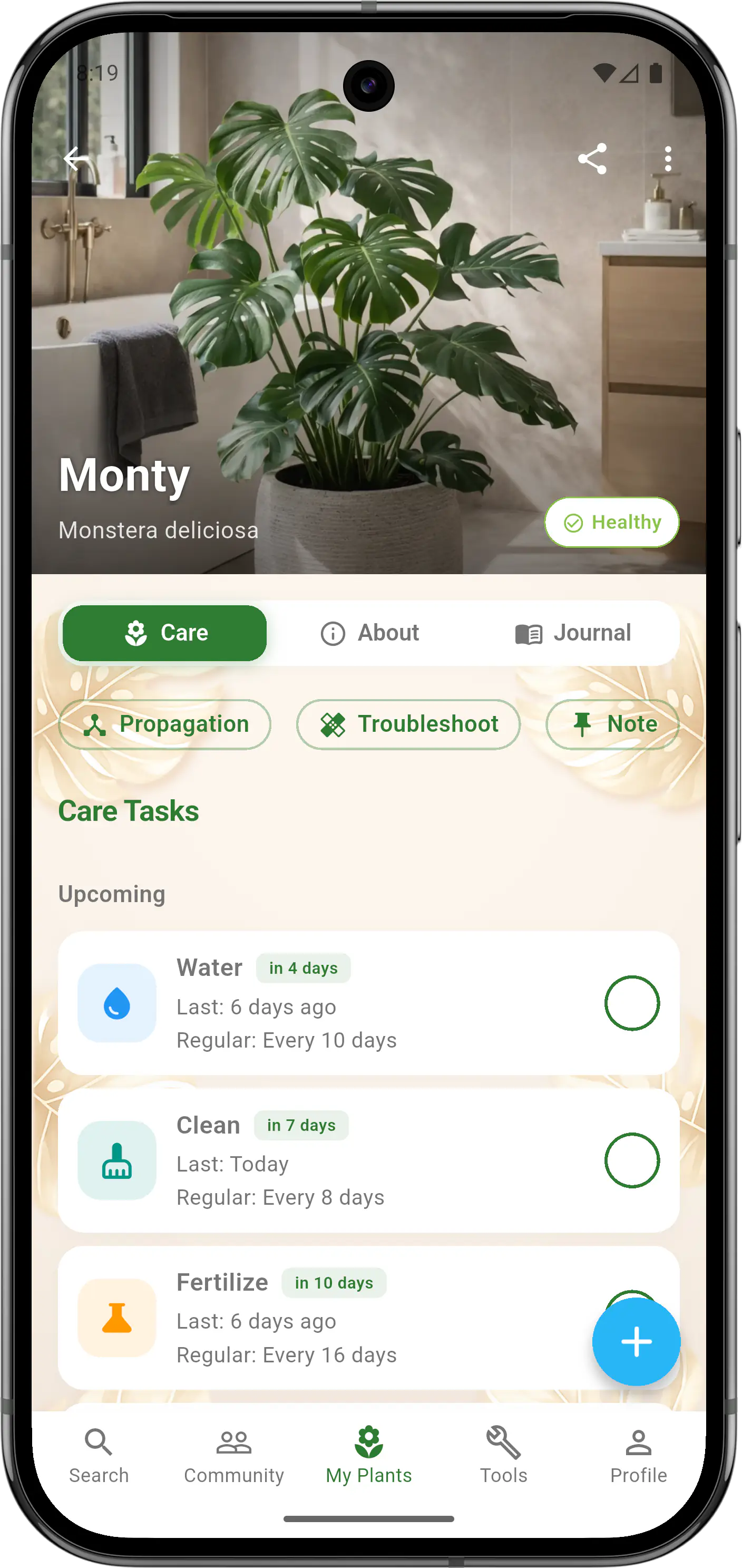
Smart Care helps you stay on track with watering, feeding, and repotting so your plants stay healthier over time.
Stay consistent
Helpful reminders keep watering, feeding, and repotting on track.
See what is working
Care history helps you notice patterns before problems get worse.
Adjust with confidence
Simple guidance helps you improve your routine over time.



Frequently Asked Questions
Most indoor foliage plants perform best around 800 to 3,500 lux, with brighter-demanding species preferring the upper part of that range. Seedlings and flowering plants may require higher sustained levels.
A practical indoor definition is roughly 2,500 to 6,000 lux without prolonged direct midday sun on leaves. Pick the option that fits your light, schedule, and room setup, because fit matters more than trends.
Yes, many can survive at 300 to 1,000 lux, but growth slows, intervals between new leaves lengthen, and watering cadence usually stretches. Before deciding, check current light, soil moisture, and root condition so your next step is based on what is actually happening.
Yes. Measure at the leaf plane because that is what the plant actually receives. Readings at floor or window level often overestimate usable light.
Plantology
Keep learning and caring with confidence
Use Plantology to solve plant problems sooner, stay consistent with care, and choose plants that fit your home.