Why is my plant growing leggy is usually a light-intensity mismatch over time. Correction works best when you improve light gradually and watch new internode spacing.
Why Is My Plant Growing Leggy

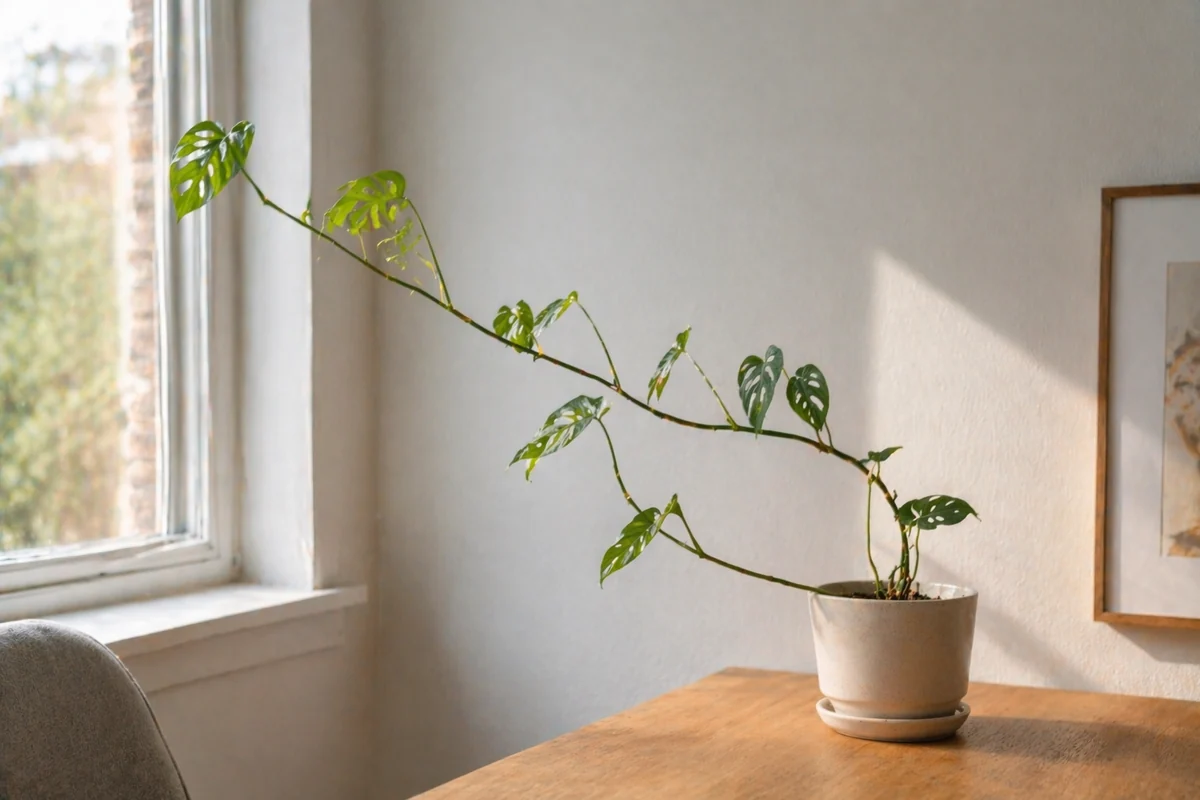
Quick Diagnosis
My plant growing leggy: quick diagnosis
Short answer
Legginess is mainly a light-quality and growth-structure issue. First step: Assess light at leaf height and check whether growth is one-sided toward a window.
Most likely causes
- Low light intensity: internodes lengthen and canopy becomes sparse
- One-sided light: growth bends strongly toward one window
- No structural reset: old stretched stems dominate plant shape
- Seasonal light drop: stretch worsens during darker months
What to do first
- Confirm leggy pattern by checking internode length on newest growth
- Increase usable light gradually over 4 to 7 days
- Rotate weekly to reduce one-sided stretch
- Prune most stretched stems after light correction starts
What not to do yet
- Do not change several care variables at once
- Do not add fertilizer before checking moisture, light, and roots
- Do not repot unless roots, drainage, or soil structure point to a root-zone problem
Symptoms to check first
Start with visible symptom patterns first, then move to causes. Symptoms can overlap, so check what you can observe before changing your routine.
Long Gaps Between Leaves
Extended internodes are one of the clearest early stretch signs.
Small Leaves On Long Stems
This usually means the plant is reaching while conserving energy.
Lean With Weak Support
When stretch and lean appear together, light direction and intensity are usually both involved.
Top causes of my plant growing leggy
Legginess is mainly a light-quality and growth-structure issue. Symptoms can overlap, so confirm moisture, light, and root-zone conditions before making multiple changes at once.
Check these first
Rule out water, light, and soil conditions before changing your full routine.
Low light intensity
Internodes lengthen and canopy becomes sparse.
One-sided light
Growth bends strongly toward one window.
No structural reset
Old stretched stems dominate plant shape.
Compare related guides for how much light do indoor plants need lux guide, why is my plant leaning toward the light, set a safer watering rhythm if symptoms overlap.
⚡ Fastest next step: Assess light at leaf height and check whether growth is one-sided toward a window.
Tracking moisture patterns over time helps remove guesswork. Plantology's Plant Doctor can automate this so decisions are based on history, not memory.
How to tell which cause fits
Start with the closest match. If several causes seem possible, track what changes over a few days and compare response patterns.
Many plant owners misdiagnose these symptoms because causes overlap. Tracking care history is often the easiest way to separate likely triggers.
Low light intensity
What it looks like: Internodes lengthen and canopy becomes sparse.
Why it happens: Low energy drives elongation over compact leaf growth.
First correction: Move closer to brighter indirect light over several days.
One-sided light
What it looks like: Growth bends strongly toward one window.
Why it happens: Directional light causes asymmetric stretch.
First correction: Rotate the pot weekly and improve overall ambient light.
No structural reset
What it looks like: Old stretched stems dominate plant shape.
Why it happens: Existing leggy structure continues directing weak growth.
First correction: Prune selected stretched stems after light improves.
Seasonal light drop
What it looks like: Stretch worsens during darker months.
Why it happens: Borderline setups fall below growth threshold in winter.
First correction: Add supplemental light or reposition for brighter winter exposure.
If you are still unsure, Plantology's Plant Doctor can track your care history and help narrow likely causes over a few days.
How to fix my plant growing leggy
Follow these steps in order so you can identify what helps without introducing conflicting changes.
Step 1
Confirm leggy pattern by checking internode length on newest growth.
Step 2
Increase usable light gradually over 4 to 7 days.
Step 3
Rotate weekly to reduce one-sided stretch.
Step 4
Prune most stretched stems after light correction starts.
Step 5
Keep watering and feeding steady while structure resets.
Step 6
Recheck in 2 to 4 weeks and track whether internodes shorten.
Most common mistake: Changing multiple variables at once and then not knowing what worked.
Plantology's Plant Doctor helps keep changes isolated so you can see which adjustment actually improved the plant.
How to prevent my plant growing leggy
Use these habits to reduce repeat symptoms and catch stress earlier.
-
Match plant placement to measurable light reality
Use this as a repeatable care habit so symptoms are easier to compare over time.
-
Rotate plants routinely in directional window setups
Use this as a repeatable care habit so symptoms are easier to compare over time.
-
Adjust for seasonal light loss before severe stretch starts
Use this as a repeatable care habit so symptoms are easier to compare over time.
-
Use light pruning during active growth to maintain shape
Use this as a repeatable care habit so symptoms are easier to compare over time.
-
Track new internode spacing as an early warning signal
Use this as a repeatable care habit so symptoms are easier to compare over time.
Pro tip: A short weekly note on watering, light, and leaf changes is often enough to catch patterns early.
If consistency is hard to maintain, Plantology's Plant Doctor can help reveal patterns early.
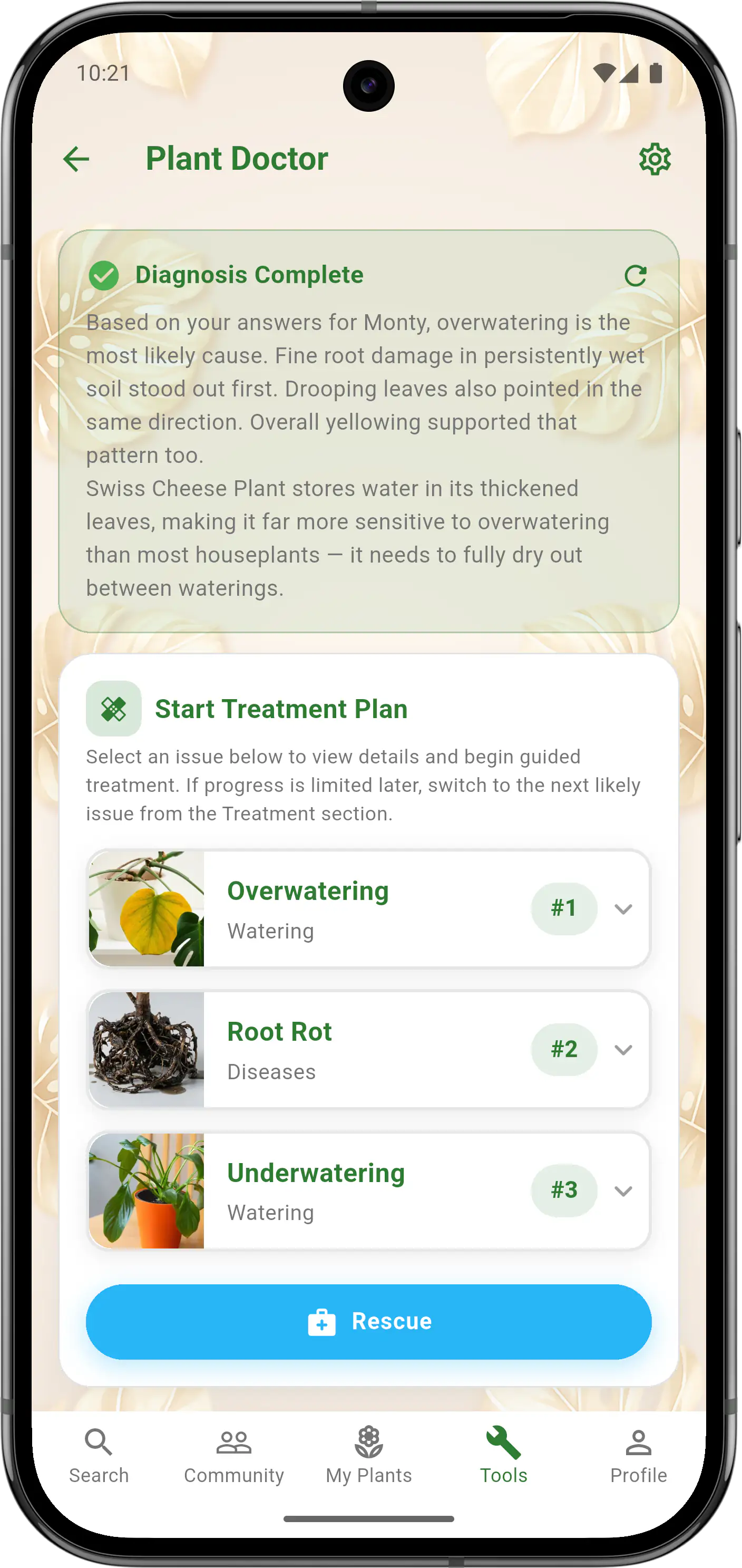
Plant Doctor
Leggy growth but unsure how much is light-related?
Plant Doctor helps compare spacing, lean, and light context so placement and pruning are easier to prioritize.
Pattern clarity
Helps you spot patterns you might miss when symptoms overlap.
Cause separation
Uses recent care history and symptom changes to narrow likely causes.
Guided next steps
Supports observation over time so fixes stay consistent and practical.


Explore More Plant Care Resources
Use the Plant Problem Diagnosis tool — Organize the visible symptom into cautious checks before choosing a treatment.

Frequently Asked Questions
Leggy growth usually means the plant is chasing light. Low intensity and one-sided light are common triggers. For beginners, make one small change at a time and watch the plant for about a week before changing something else.
Existing stretch does not shrink back, but future growth can be denser with better light and pruning. Before deciding, check current light, soil moisture, and root condition so your next step is based on what is actually happening.
Usually yes, once light is improved. Pruning helps encourage fuller branching. Before deciding, check current light, soil moisture, and root condition so your next step is based on what is actually happening.
Here is the short answer. Not on its own. Feeding in weak light can speed poor-quality stretch. For beginners, make one small change at a time and watch the plant for about a week before changing something else.
Plantology
Fix Plant Problems With More Confidence
Use Plant Doctor to understand what is happening and choose practical next steps for your plant.
- Check symptoms clearly
- Follow practical treatment steps
- Avoid repeat problems