How often should you water houseplants becomes more reliable when you use measurable ranges and repeatable routines instead of generic tips.
How Often Should You Water Houseplants

Quick Action Overview
At a glance: what to do first
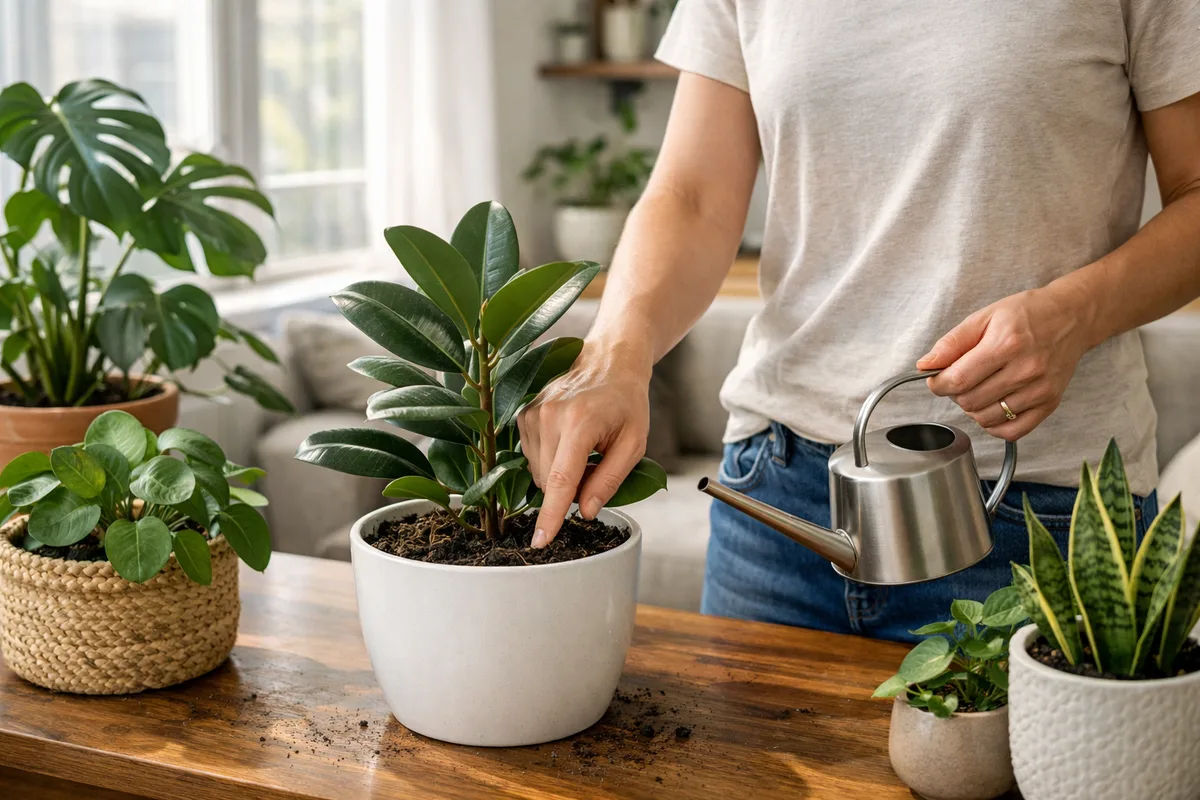
Check moisture 2 to 5 cm below the surface, not just the top crust.
Match cadence to light: lower lux means slower dry-down and fewer watering events.
Water thoroughly to runoff, then wait for the next measured dry-down threshold.
Adjust one variable at a time and observe for 7 to 14 days.
Core Explanation
How watering actually works
Watering works best when you check root moisture, adjust for light and growth speed, and use ranges instead of fixed schedules.
Light intensity
At about 800 to 2,500 lux, many indoor plants dry slower than in 2,500 to 6,000 lux bright-indirect zones.
Root health
Healthy roots uptake evenly; stressed roots need longer recovery windows and slower cadence changes.
Substrate structure
Airy mixes can dry in 5 to 9 days, while dense mixes may stay wet 10 to 14+ days in the same room.
If symptoms overlap, compare overwatering plants and underwatering plants before making multiple changes.
Step-By-Step System
Build a repeatable watering system
Step 1 - Measure baseline
Check moisture at 2 to 5 cm depth and confirm pot weight before watering.
Target range: Water most foliage plants when roughly the top 30 to 50% has dried.
Step 2 - Set a light-linked range
Place your plant into a low, medium, or bright-indirect light band.
Target range: Low: below 800 lux. Medium: 800 to 2,500 lux. Bright indirect: 2,500 to 6,000 lux.
Step 3 - Water deeply, then pause
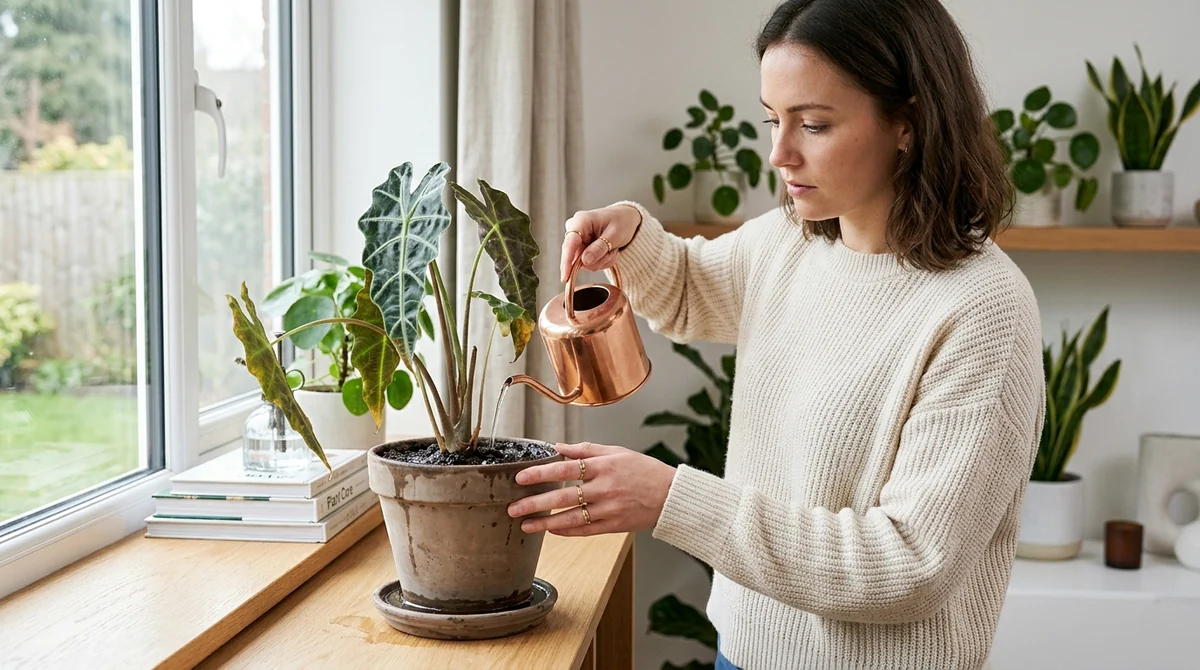
Water until light runoff, then stop and let the full root zone rebalance.
Target range: Do not rewater on a fixed day; recheck depth every 1 to 2 days.
Step 4 - Adjust one variable
If stress persists, change either light or cadence, not both.
Target range: Hold the change for 7 to 14 days before making a second adjustment.
Why This Works
Why condition-based watering decisions are more reliable
Most watering problems come from timing mismatches, not effort. When routine and plant demand drift apart, stress builds before symptoms become obvious.
A condition-based approach lowers over-correction. You verify real signals first, then make one change at a time so results are easier to read.
This creates a repeatable system you can adapt through season changes without resetting your entire routine.
Key Variables
Use these variables as your control panel
Light intensity
At about 800 to 2,500 lux, many indoor plants dry slower than in 2,500 to 6,000 lux bright-indirect zones.
Root health
Healthy roots uptake evenly; stressed roots need longer recovery windows and slower cadence changes.
Substrate structure
Airy mixes can dry in 5 to 9 days, while dense mixes may stay wet 10 to 14+ days in the same room.
Common Mistakes
Errors that create avoidable stress
Fixed schedules
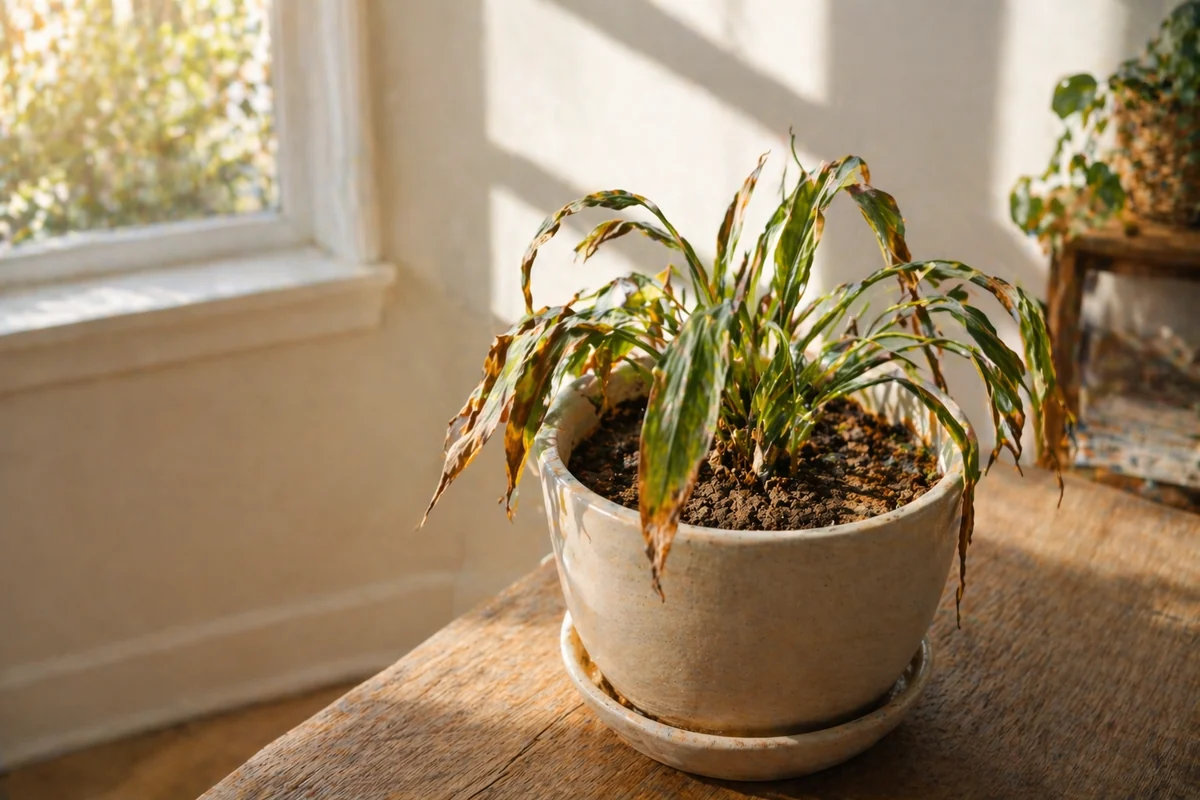
Often leads to overwatering in low light and underwatering in bright rooms.
Do this instead: Use calendar reminders as prompts, then confirm root-zone moisture before watering.
Surface-only checks
Topsoil can look dry while the center remains wet for days.
Do this instead: Probe below the surface or use pot weight to verify full-profile moisture.
Multi-variable changes
You cannot tell which change helped, so problems repeat.
Do this instead: Change one variable and track response weekly.
Practical Ranges
Concrete ranges you can apply immediately
Measure baseline
Action
Check moisture at 2 to 5 cm depth and confirm pot weight before watering.
Target range
Water most foliage plants when roughly the top 30 to 50% has dried.
Set a light-linked range
Action
Place your plant into a low, medium, or bright-indirect light band.
Target range
Low: below 800 lux. Medium: 800 to 2,500 lux. Bright indirect: 2,500 to 6,000 lux.
Water deeply, then pause
Action
Water until light runoff, then stop and let the full root zone rebalance.
Target range
Do not rewater on a fixed day; recheck depth every 1 to 2 days.
Real Example
Case study: Monstera deliciosa (medium light)
Situation
A practical watering schedule for houseplants is a range, not one fixed interval.
Mistake
Summer: usually every 7 to 10 days after about 40% top-layer dry-down.
Adjustment
Winter: usually every 10 to 14 days as growth and evaporation slow.
Result
Light context: about 1,500 to 3,500 lux keeps cadence more stable.
Smart Care
Turn Plant Advice Into a Routine You Can Keep
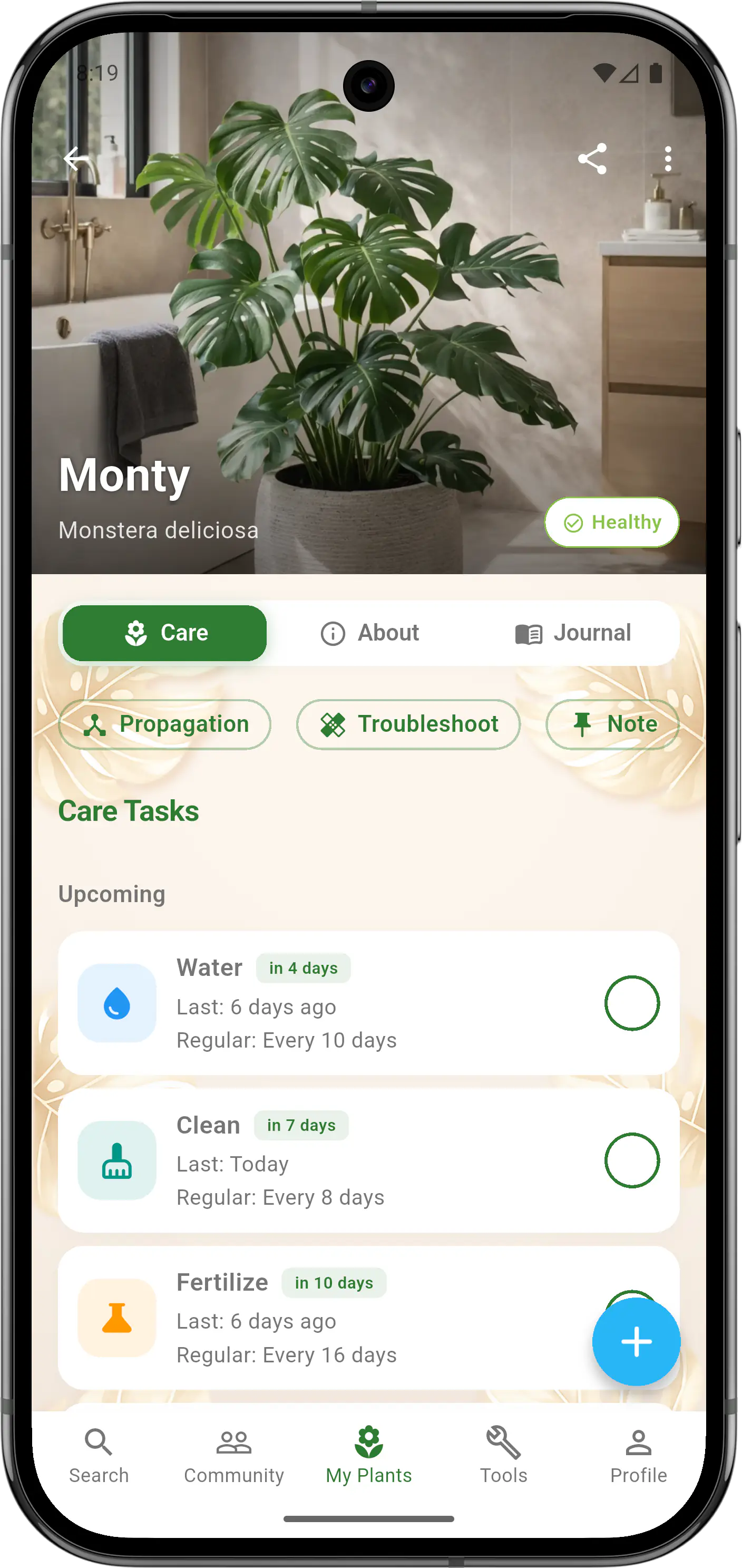
Smart Care helps you stay on track with watering, feeding, and repotting so your plants stay healthier over time.
Stay consistent
Helpful reminders keep watering, feeding, and repotting on track.
See what is working
Care history helps you notice patterns before problems get worse.
Adjust with confidence
Simple guidance helps you improve your routine over time.



Frequently Asked Questions
Start with moisture checks, not dates. Many indoor plants are watered when the top 30 to 50% of mix dries, which often lands around 7 to 10 days in brighter seasons and 10 to 14 days in darker seasons.
Use a schedule as a reminder only. Confirm root-zone moisture each time, because the same plant can shift several days depending on lux, temperature, and growth speed.
Check 2 to 5 cm below the surface and confirm pot weight trend. Surface dryness alone is not enough, especially in dense mixes where deeper layers stay wet longer.
Yes. Plants under roughly 2,500 to 6,000 lux bright-indirect light usually use water faster than plants below 800 lux, so dry-down and watering cadence become shorter.
Plantology
Keep learning and caring with confidence
Use Plantology to solve plant problems sooner, stay consistent with care, and choose plants that fit your home.