Underwatering plants is usually about inconsistent rehydration, not just missed watering days. You get better results when you confirm how dry the full rootball is before deciding on the next watering step.
Underwatering Plants

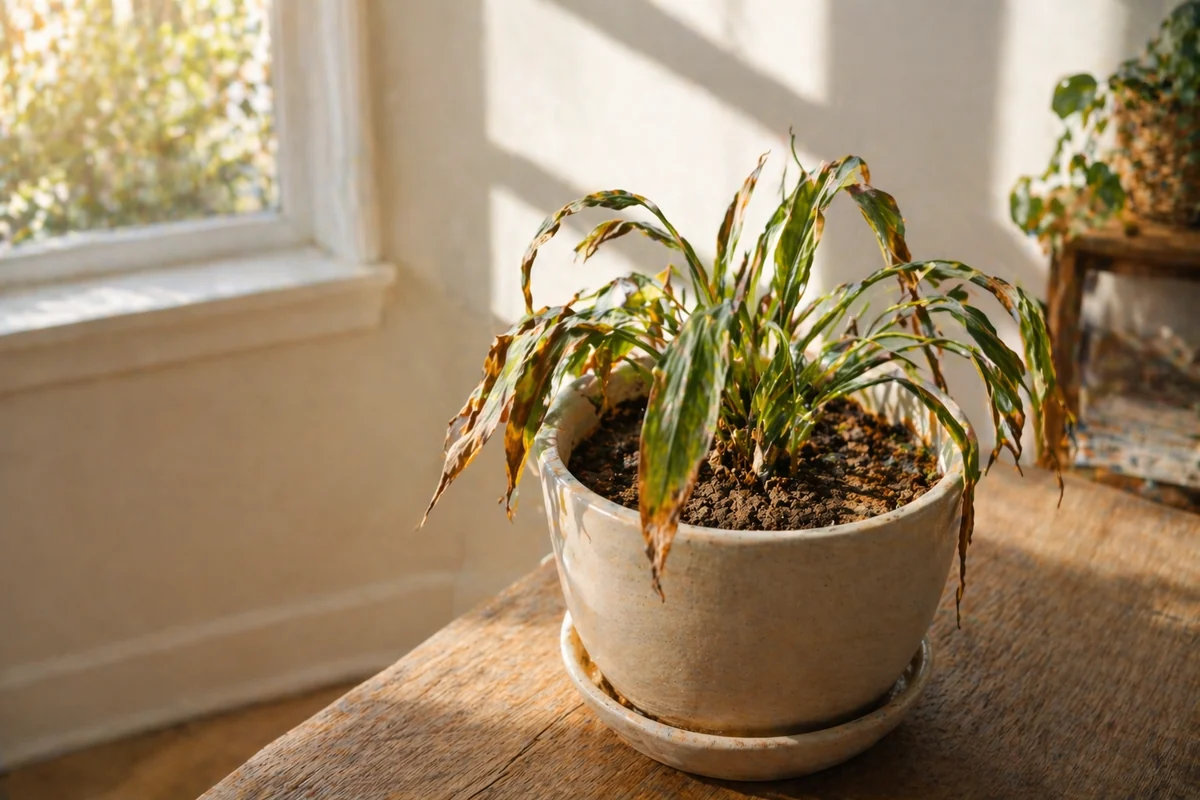
Quick Diagnosis
Underwatering plants: quick diagnosis
Short answer
Underwatering stress appears when roots spend too long below the moisture range needed for stable nutrient and water movement. First step: Check whether the rootball is dry throughout, not just at the surface, then rehydrate thoroughly if needed.
Most likely causes
- Infrequent watering routine: pot is consistently very light and foliage recovers only briefly after watering
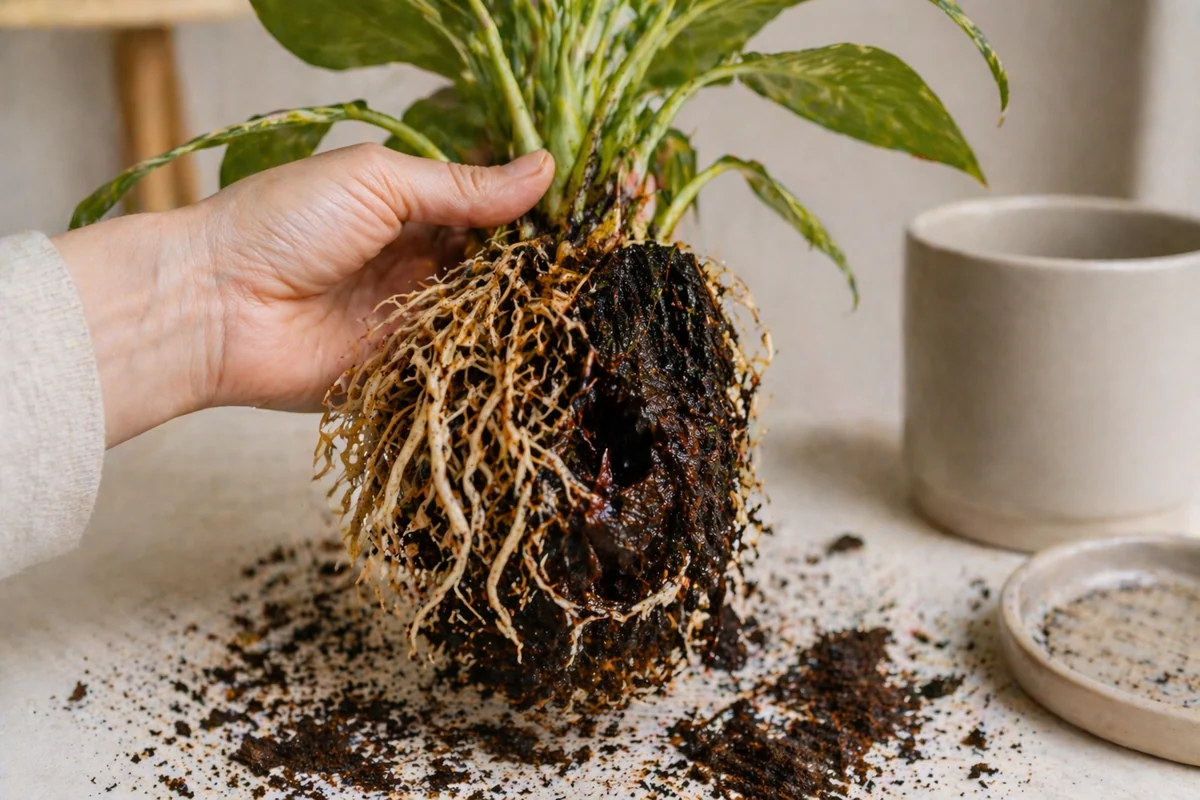
- Hydrophobic rootball: water runs down pot edges while center remains dry
- High evaporative demand: symptoms worsen in bright windows, heat waves, or moving air
- Rootbound or small container: soil volume dries within a day or two
What to do first
- Confirm full rootball dryness with a moisture probe or finger depth check
- Rehydrate deeply until runoff; if water channels, soak once to reset the rootball
- Trim only fully dead or crispy tissue and keep healthy leaves for recovery
- Stabilize placement to reduce heat and airflow stress during rebound
What not to do yet
- Do not change several care variables at once
- Do not add fertilizer before checking moisture, light, and roots
- Do not repot unless roots, drainage, or soil structure point to a root-zone problem
Symptoms to check first
Start with visible symptom patterns first, then move to causes. Symptoms can overlap, so check what you can observe before changing your routine.
Dry Soil Pulling From Pot
Watch for slow growth plus persistent stress signs even after basic care corrections.
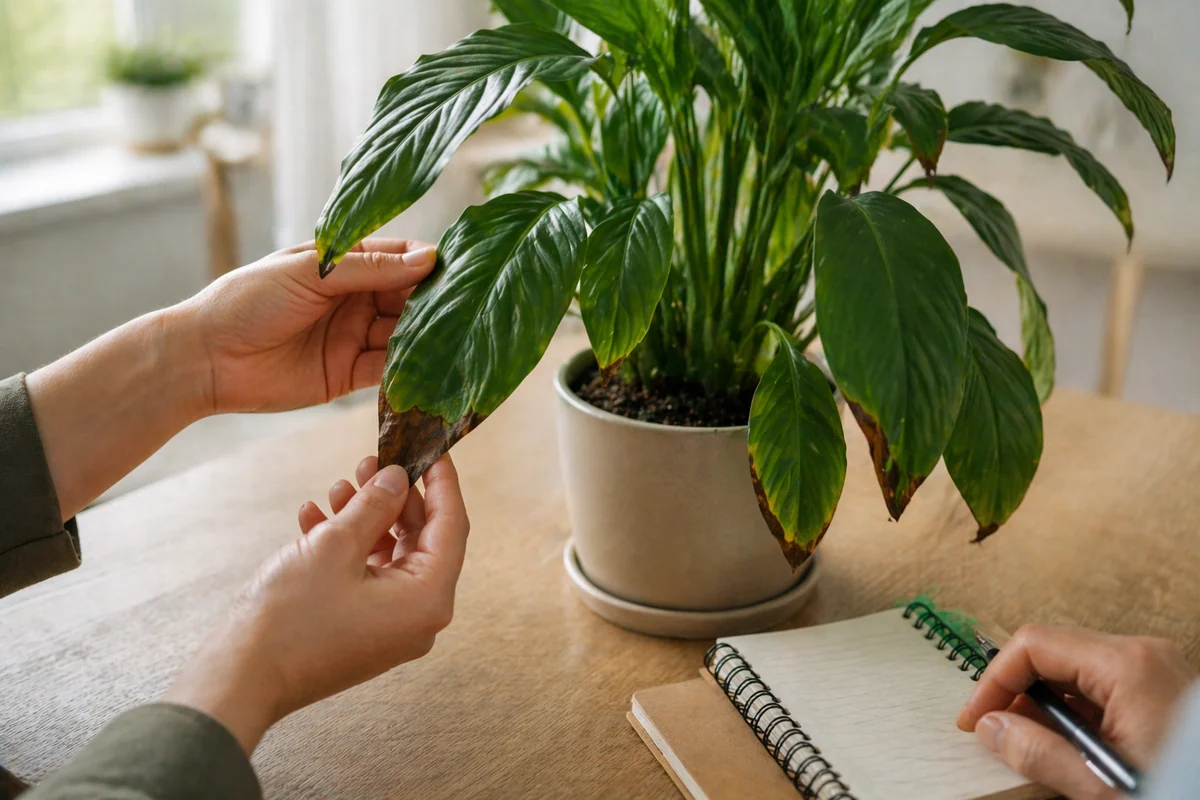
Crispy Edges
Look for dry, crisp edges and note if damage appears first on older leaf tips.
Droop With Dry Roots
Compare leaf firmness morning vs evening and check if stems stay limp after rest.
Top causes of underwatering plants
Underwatering stress appears when roots spend too long below the moisture range needed for stable nutrient and water movement. Symptoms can overlap, so confirm moisture, light, and root-zone conditions before making multiple changes at once.
Check these first
Rule out water, light, and soil conditions before changing your full routine.
Infrequent watering routine
Pot is consistently very light and foliage recovers only briefly after watering.
Hydrophobic rootball
Water runs down pot edges while center remains dry.
High evaporative demand
Symptoms worsen in bright windows, heat waves, or moving air.
Compare related guides for brown tips on houseplants, how to keep houseplants alive, check root rot warning signs if symptoms overlap.
⚡ Fastest next step: Check whether the rootball is dry throughout, not just at the surface, then rehydrate thoroughly if needed.
Tracking moisture patterns over time helps remove guesswork. Plantology's Plant Doctor can automate this so decisions are based on history, not memory.
How to tell which cause fits
Start with the closest match. If several causes seem possible, track what changes over a few days and compare response patterns.
Many plant owners misdiagnose these symptoms because causes overlap. Tracking care history is often the easiest way to separate likely triggers.
Infrequent watering routine
What it looks like: Pot is consistently very light and foliage recovers only briefly after watering.
Why it happens: Roots repeatedly dry past recovery-friendly thresholds.
First correction: Make one targeted adjustment and review response over the next few days.
Hydrophobic rootball
What it looks like: Water runs down pot edges while center remains dry.
Why it happens: Dry peat-based media repels water and blocks even rehydration.
First correction: Make one targeted adjustment and review response over the next few days.
High evaporative demand
What it looks like: Symptoms worsen in bright windows, heat waves, or moving air.
Why it happens: Transpiration exceeds what roots can supply between waterings.
First correction: Make one targeted adjustment and review response over the next few days.
Rootbound or small container
What it looks like: Soil volume dries within a day or two.
Why it happens: Limited substrate holds too little water buffer for the plant size.
First correction: Make one targeted adjustment and review response over the next few days.
If you are still unsure, Plantology's Plant Doctor can track your care history and help narrow likely causes over a few days.
How to fix underwatering in houseplants
Follow these steps in order so you can identify what helps without introducing conflicting changes.
Step 1
Confirm full rootball dryness with a moisture probe or finger depth check.
Step 2
Rehydrate deeply until runoff; if water channels, soak once to reset the rootball.
Step 3
Trim only fully dead or crispy tissue and keep healthy leaves for recovery.
Step 4
Stabilize placement to reduce heat and airflow stress during rebound.
Step 5
Set a moisture-based watering rhythm tied to real dry-down timing.
Step 6
Log watering date, pot weight, and leaf response to prevent repeat cycles.
Most common mistake: Changing multiple variables at once and then not knowing what worked.
Plantology's Plant Doctor helps keep changes isolated so you can see which adjustment actually improved the plant.
How to prevent underwatering in houseplants
Use these habits to reduce repeat symptoms and catch stress earlier.
-
Water thoroughly when root-zone checks confirm true dryness
Water thoroughly when root-zone checks confirm true dryness. Aim for full wetting, not a small surface splash.
-
Use substrate that rewets easily and does not become hydrophobic
Use substrate that rewets easily and does not become hydrophobic. This prevents dry cores after partial watering.
-
Adjust cadence during hotter, brighter, or drier periods
Adjust cadence during hotter, brighter, or drier periods. Demand shifts quickly with environment changes.
-
Upsize or repot when roots outgrow current water-holding volume
Upsize or repot when roots outgrow current water-holding volume. Small rootbound pots dry too fast for stability.
-
Track dry-down speed so watering stays consistent
Track dry-down speed so watering stays consistent. A simple log reduces missed or delayed water cycles.
Pro tip: A short weekly note on watering, light, and leaf changes is often enough to catch patterns early.
If consistency is hard to maintain, Plantology's Plant Doctor can help reveal patterns early.
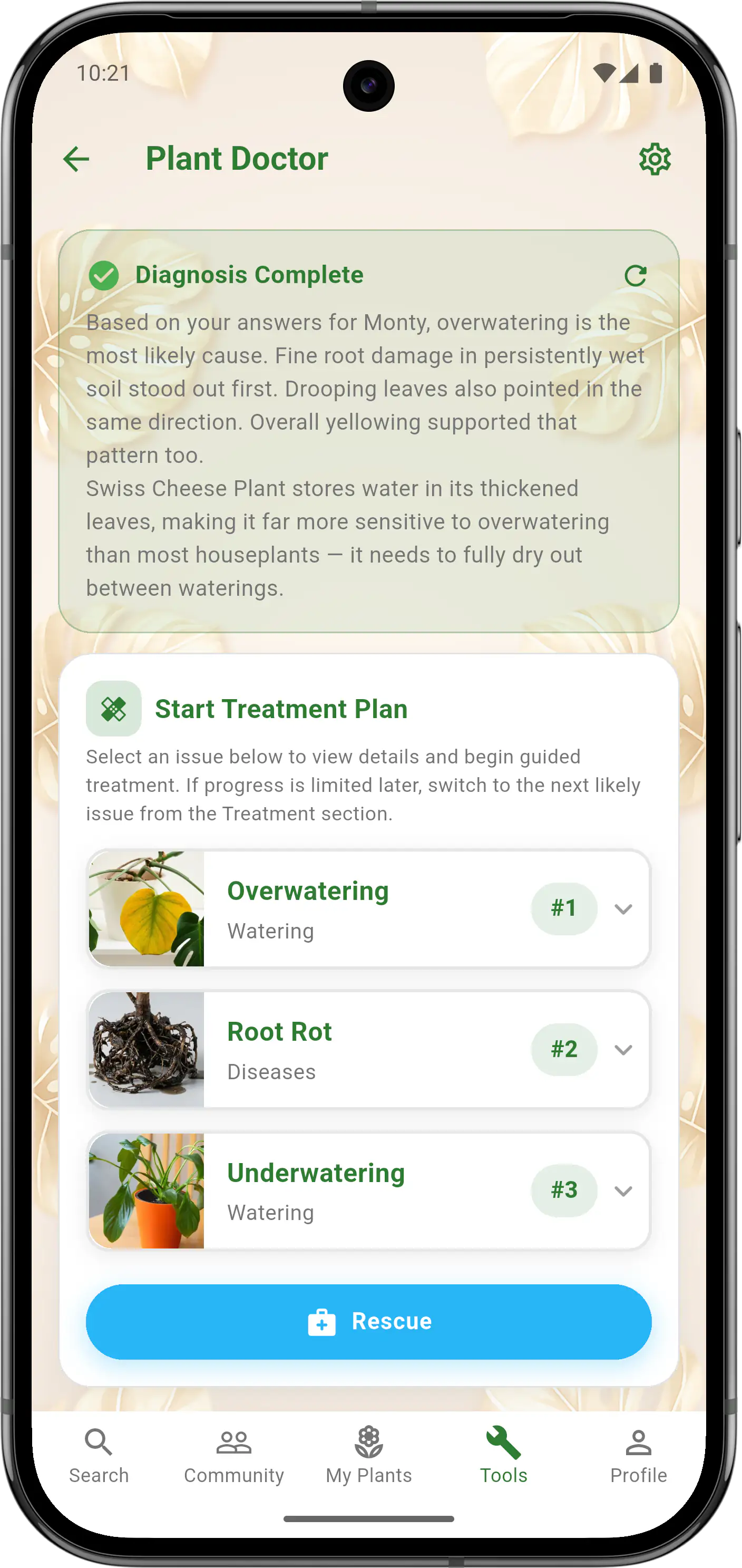
Plant Doctor
Still unsure if it is drought stress or something else?
Plant Doctor helps you track dry-down timing, watering events, and symptom changes so underwatering patterns become obvious before severe damage builds.
Pattern clarity
Helps you spot patterns you might miss when symptoms overlap.
Cause separation
Uses recent care history and symptom changes to narrow likely causes.
Guided next steps
Supports observation over time so fixes stay consistent and practical.


Explore More Plant Care Resources
Use the Plant Problem Diagnosis tool — Organize the visible symptom into cautious checks before choosing a treatment.

Frequently Asked Questions
Common signs are very light pots, dry soil pulling from pot edges, drooping that improves after watering, and crispy leaf edges. A simple way to do this is to check light and soil moisture first, then track the result for 7 to 14 days.
Often yes, especially if stems and crown remain firm. Rehydrate gradually, stabilize light, and avoid overcorrecting with daily watering. Before deciding, check current light, soil moisture, and root condition so your next step is based on what is actually happening.
If the rootball is hydrophobic and water runs through quickly, bottom soak 15-30 minutes once, then return to moisture-based watering. Before deciding, check current light, soil moisture, and root condition so your next step is based on what is actually happening.
Use root-depth moisture checks, water thoroughly when needed, and track dry-down timing instead of relying on memory. A simple way to do this is to check light and soil moisture first, then track the result for 7 to 14 days.
Plantology
Fix Plant Problems With More Confidence
Use Plant Doctor to understand what is happening and choose practical next steps for your plant.
- Check symptoms clearly
- Follow practical treatment steps
- Avoid repeat problems