Root rot in plants develops when roots stay oxygen-starved long enough for tissue to collapse. Fast triage is critical: confirm root condition early, remove rot, and reset drainage before symptoms spread.
Root Rot in Plants

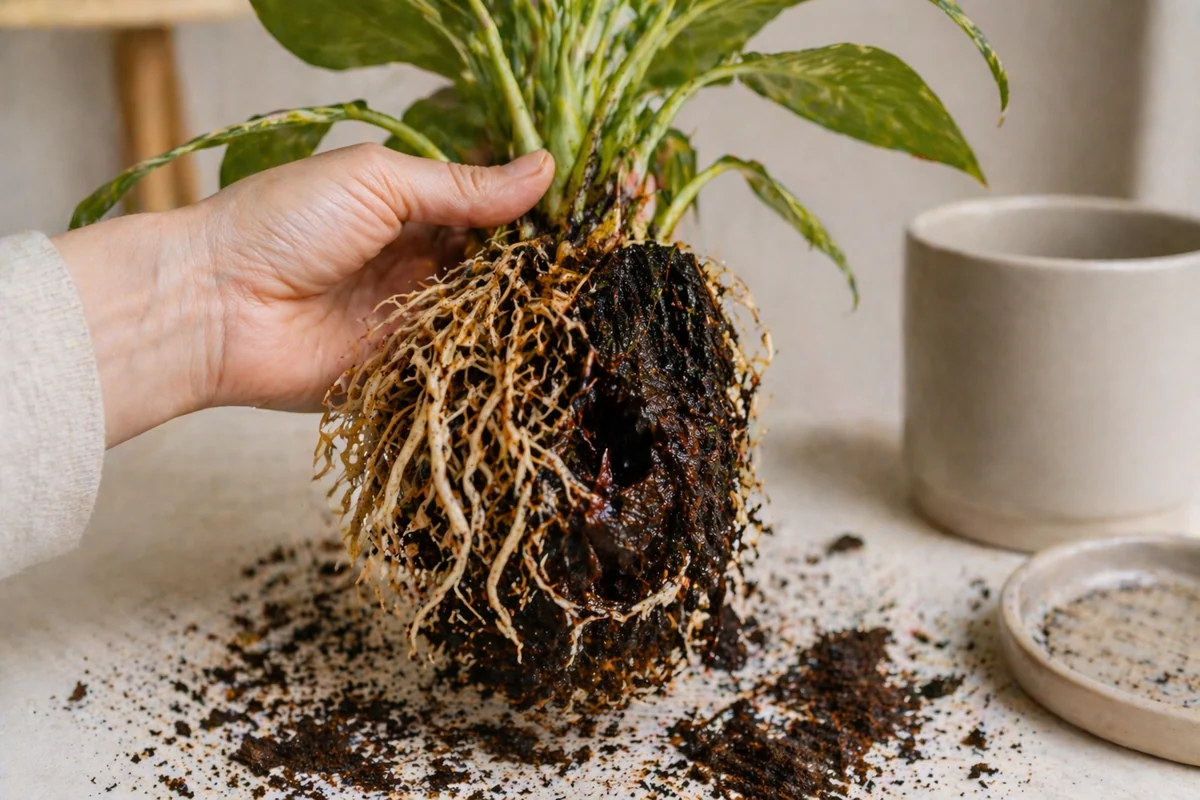
Quick Diagnosis
Root rot in plants: quick diagnosis
Short answer
Root rot is usually an escalation of chronic overwatering, poor drainage, or oxygen-starved substrate conditions. First step: Unpot and inspect roots near the center: confirm whether roots are firm and pale or dark and mushy.
Most likely causes
- Chronic wet root zone: soil stays wet for long periods and foliage declines despite moisture
- Compacted anaerobic substrate: dense mix with sour smell and slow, uneven drainage
- Opportunistic pathogens: rapid decline after prolonged wetness with blackened root tissue
- Poor container drainage: water pooling or trapped water in decorative cachepots
What to do first
- Remove the plant and rinse roots so healthy and rotten tissue are clearly visible
- Sterilize shears, then trim all mushy, black, or foul-smelling roots
- Discard old saturated soil and sanitize the pot if you are reusing it
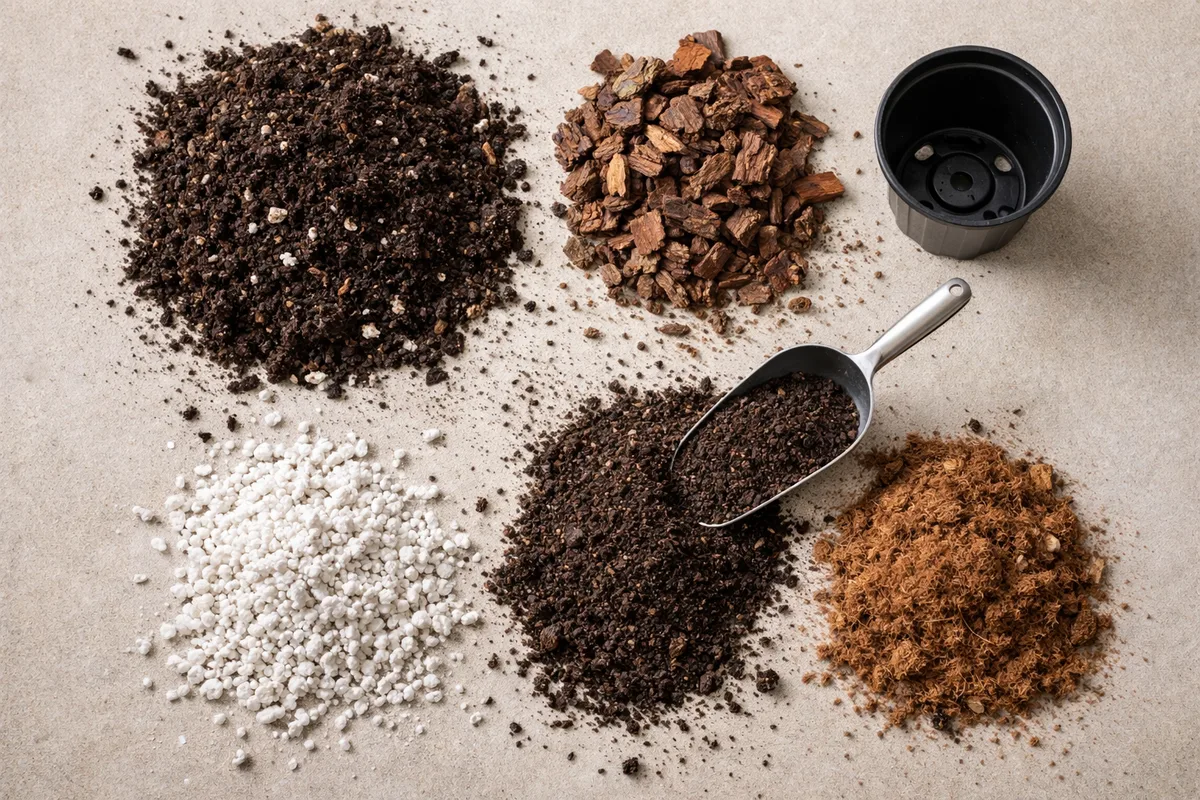
- Repot into an aerated mix with drainage support and proper hole clearance
What not to do yet
- Do not change several care variables at once
- Do not add fertilizer before checking moisture, light, and roots
- Do not repot unless roots, drainage, or soil structure point to a root-zone problem
Symptoms to check first
Start with visible symptom patterns first, then move to causes. Symptoms can overlap, so check what you can observe before changing your routine.
Foul Root Odor
Watch for slow growth plus persistent stress signs even after basic care corrections.
Wet Soil With Yellow Leaves
Track whether yellowing is gradual or sudden, then compare moisture, roots, and recent placement changes.
Black Mushy Roots
Watch for slow growth plus persistent stress signs even after basic care corrections.
Top causes of root rot in plants
Root rot is usually an escalation of chronic overwatering, poor drainage, or oxygen-starved substrate conditions. Symptoms can overlap, so confirm moisture, light, and root-zone conditions before making multiple changes at once.
Check these first
Rule out water, light, and soil conditions before changing your full routine.
Chronic wet root zone
Soil stays wet for long periods and foliage declines despite moisture.
Compacted anaerobic substrate
Dense mix with sour smell and slow, uneven drainage.
Opportunistic pathogens
Rapid decline after prolonged wetness with blackened root tissue.
Compare related guides for overwatering plants, best soil for indoor plants, set a safer watering rhythm if symptoms overlap.
⚡ Fastest next step: Unpot and inspect roots near the center: confirm whether roots are firm and pale or dark and mushy.
Tracking moisture patterns over time helps remove guesswork. Plantology's Plant Doctor can automate this so decisions are based on history, not memory.
How to tell which cause fits
Start with the closest match. If several causes seem possible, track what changes over a few days and compare response patterns.
Many plant owners misdiagnose these symptoms because causes overlap. Tracking care history is often the easiest way to separate likely triggers.
Chronic wet root zone
What it looks like: Soil stays wet for long periods and foliage declines despite moisture.
Why it happens: Roots lose oxygen and begin to die back.
First correction: Make one targeted adjustment and review response over the next few days.
Compacted anaerobic substrate
What it looks like: Dense mix with sour smell and slow, uneven drainage.
Why it happens: Air exchange is too low for root respiration.
First correction: Make one targeted adjustment and review response over the next few days.
Opportunistic pathogens
What it looks like: Rapid decline after prolonged wetness with blackened root tissue.
Why it happens: Damaged roots are more vulnerable to rot organisms.
First correction: Make one targeted adjustment and review response over the next few days.
Poor container drainage
What it looks like: Water pooling or trapped water in decorative cachepots.
Why it happens: Excess moisture remains around sensitive feeder roots.
First correction: Make one targeted adjustment and review response over the next few days.
If you are still unsure, Plantology's Plant Doctor can track your care history and help narrow likely causes over a few days.
How to fix root rot in houseplants
Follow these steps in order so you can identify what helps without introducing conflicting changes.
Step 1
Remove the plant and rinse roots so healthy and rotten tissue are clearly visible.
Step 2
Sterilize shears, then trim all mushy, black, or foul-smelling roots.
Step 3
Discard old saturated soil and sanitize the pot if you are reusing it.
Step 4
Repot into an aerated mix with drainage support and proper hole clearance.
Step 5
Water once after repot, then wait for appropriate dry-down before watering again.
Step 6
Monitor recovery weekly and remove additional rot only if symptoms continue.
Most common mistake: Changing multiple variables at once and then not knowing what worked.
Plantology's Plant Doctor helps keep changes isolated so you can see which adjustment actually improved the plant.
How to prevent root rot in houseplants
Use these habits to reduce repeat symptoms and catch stress earlier.
-
Avoid keeping substrate continuously wet between waterings
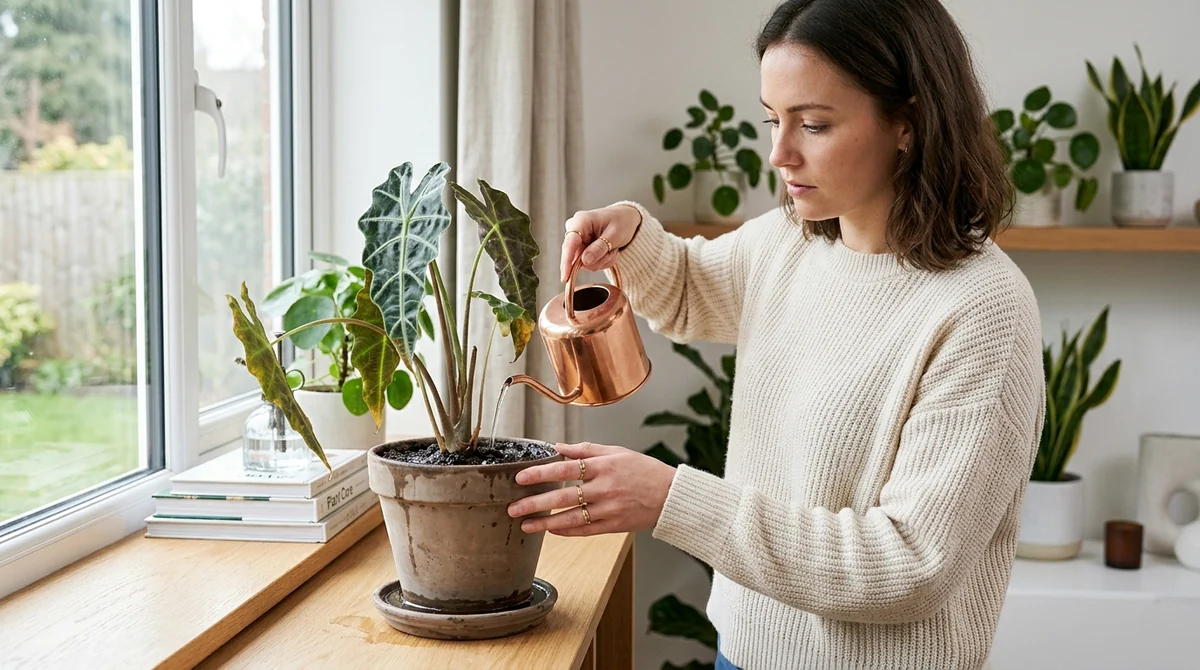
Avoid keeping substrate continuously wet between waterings. Roots need oxygen windows to stay healthy.
-
Use mixes that hold moisture but still drain and breathe well
Use mixes that hold moisture but still drain and breathe well. Balanced structure lowers anaerobic risk.
-
Never let runoff water sit around the root zone
Never let runoff water sit around the root zone. Remove trapped water from saucers and cachepots promptly.
-
Match watering cadence to light and seasonal growth rate
Match watering cadence to light and seasonal growth rate. Slower growth periods need less frequent watering.
-
Check roots early when yellowing and wet soil appear together
Check roots early when yellowing and wet soil appear together. Early inspection prevents deeper rot escalation.
Pro tip: A short weekly note on watering, light, and leaf changes is often enough to catch patterns early.
If consistency is hard to maintain, Plantology's Plant Doctor can help reveal patterns early.
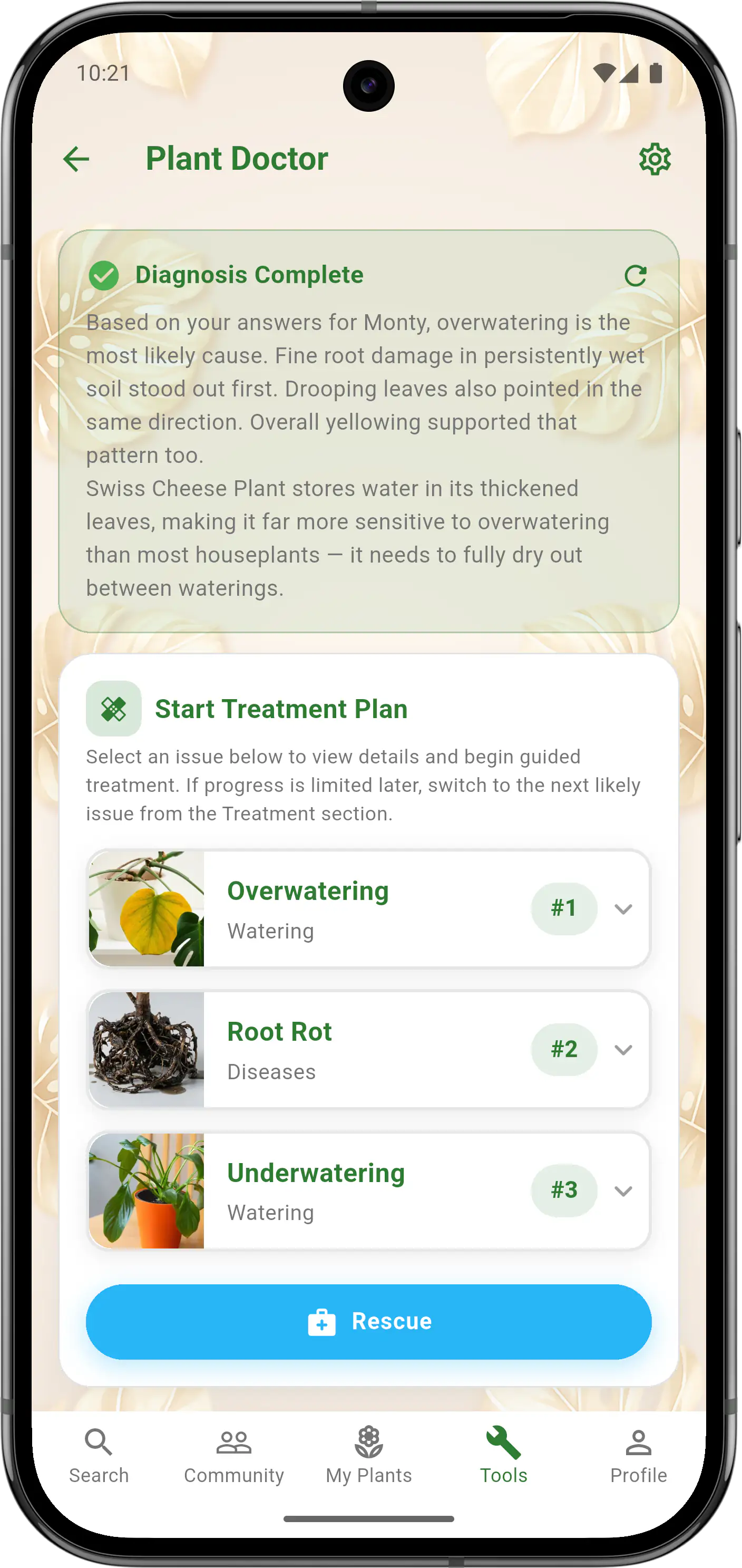
Plant Doctor
Need help separating root rot from early overwatering?
Plant Doctor helps you combine symptom photos, care history, and root-zone checks so recovery decisions are faster and more consistent.
Pattern clarity
Helps you spot patterns you might miss when symptoms overlap.
Cause separation
Uses recent care history and symptom changes to narrow likely causes.
Guided next steps
Supports observation over time so fixes stay consistent and practical.


Explore More Plant Care Resources
Use the Plant Problem Diagnosis tool — Organize the visible symptom into cautious checks before choosing a treatment.

Frequently Asked Questions
Early signs include persistent wet soil, sour odor, yellowing despite wet media, and roots turning brown, soft, or mushy. Pick the option that fits your light, schedule, and room setup, because fit matters more than trends.
Yes in many cases if healthy roots remain. Remove rotted tissue, disinfect tools, repot into aerated mix, and correct watering cadence. Before deciding, check current light, soil moisture, and root condition so your next step is based on what is actually happening.
Yes. Remove only soft, dark, or slimy roots back to firm tissue. Keep white or tan firm roots to preserve recovery capacity. Before deciding, check current light, soil moisture, and root condition so your next step is based on what is actually happening.
Use faster-draining substrate, ensure full drainage, water by root-zone checks, and avoid keeping the pot continuously wet. A simple way to do this is to check light and soil moisture first, then track the result for 7 to 14 days.
Plantology
Fix Plant Problems With More Confidence
Use Plant Doctor to understand what is happening and choose practical next steps for your plant.
- Check symptoms clearly
- Follow practical treatment steps
- Avoid repeat problems