Best low light indoor plants are the ones whose catalog profile still makes sense when the room is dim, the growth rate is slower, and the watering rhythm stretches out.
Best Low Light Indoor Plants

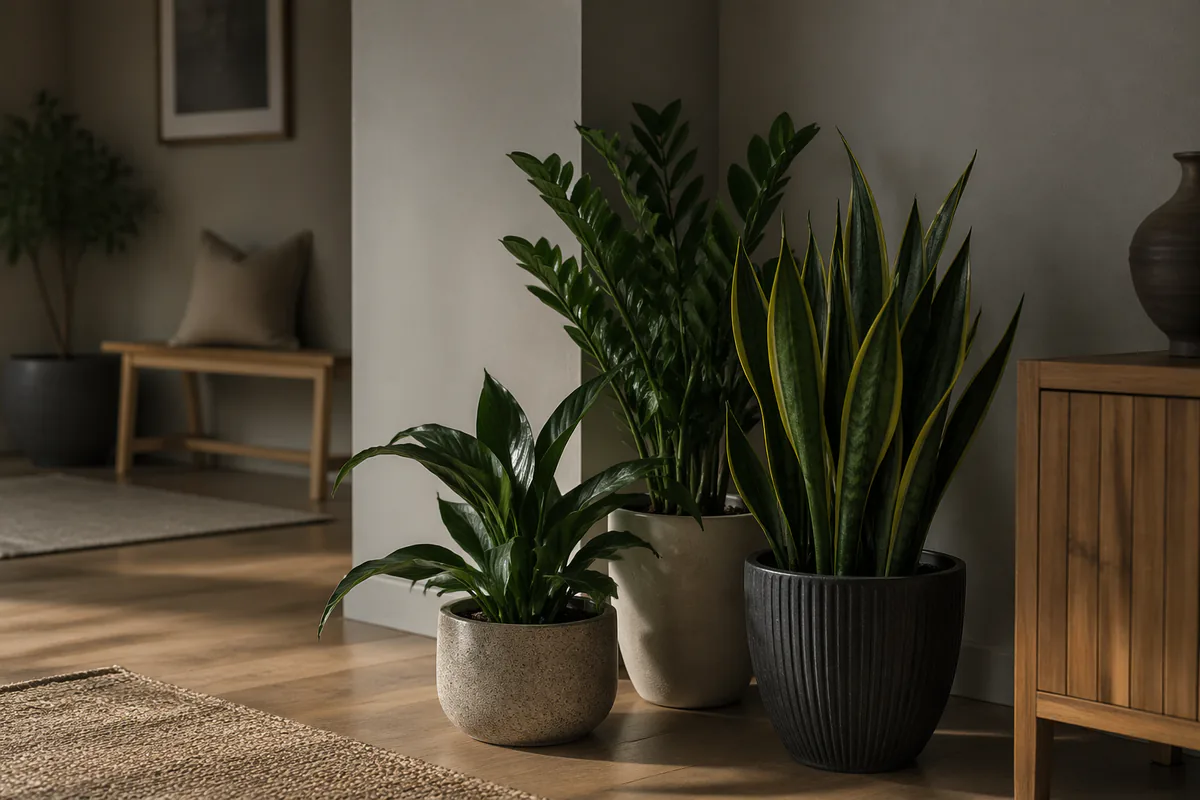
Selection Lens
How to shortlist the right plant
Choose plants that either prefer low light or clearly tolerate it, then narrow further by watering pace and shape so the list fits real dim rooms.
Prefer genuine low-light fit
If low light is preferred or clearly tolerated in the catalog, the plant has a better chance of staying presentable over time.
Watch watering speed
Dim rooms usually dry slower, so low-light recommendations should not all rely on frequent watering.
Choose stable shapes
Slow-growth self-standing plants usually age better in dark corners than fast hanging plants chasing light.
Top Picks
Best low-light picks that actually fit dim rooms
These plants made the list because their catalog data keeps them viable when a room stays low or medium rather than truly bright indirect.
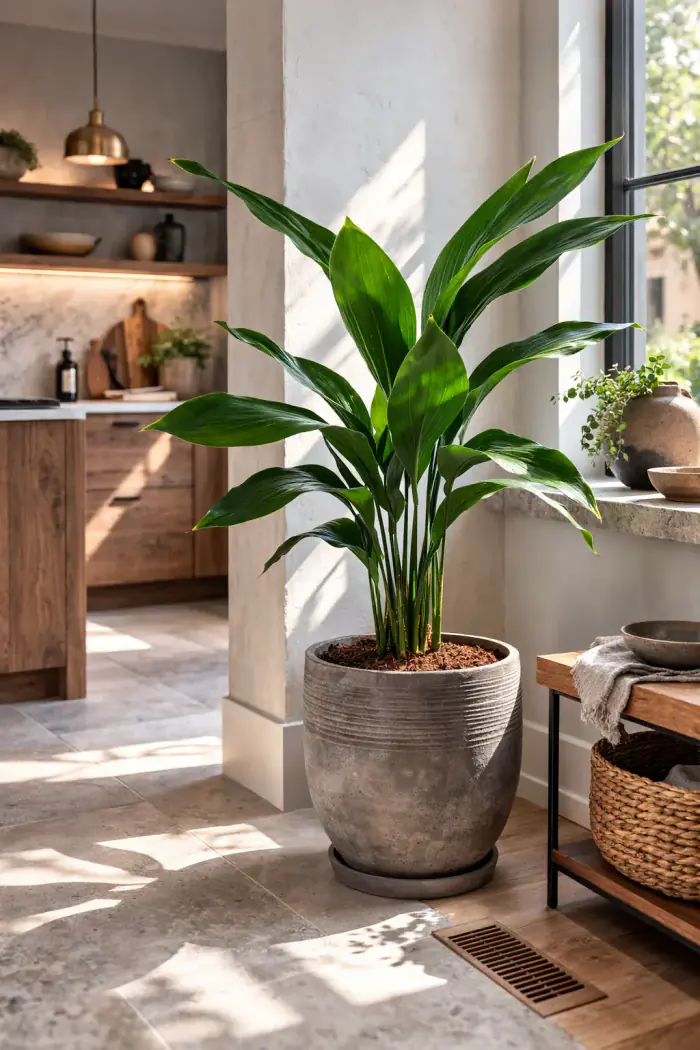
Cast Iron Plant
Aspidistra elatior
If the room is genuinely dim, this is the strongest catalog-backed pick because low light is its preferred zone, not just tolerated.
Difficulty: Easy
Light: Low
Water: Moderate
Pets: Safe
Dark corners, low-light apartments, and pet homes that need a sturdy self-standing plant.
It is more about stability than speed, so do not choose it if you want fast visible growth.
Habit: Self-standingTolerates: MediumCatalog size: 60 x 60 cmMaintenance: Low
View in plant library
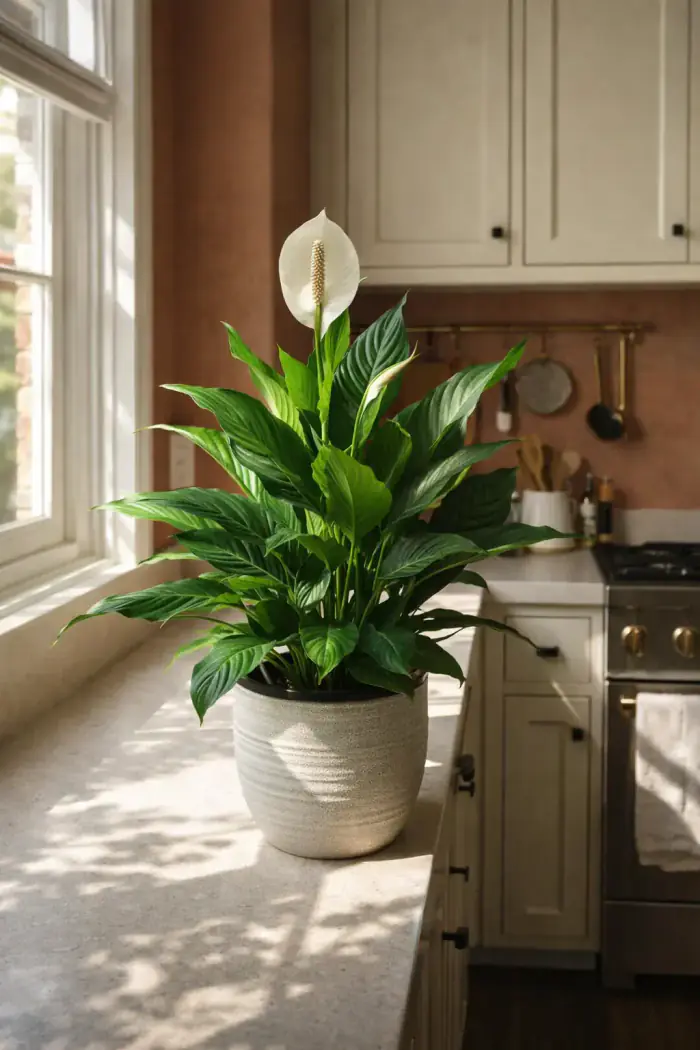
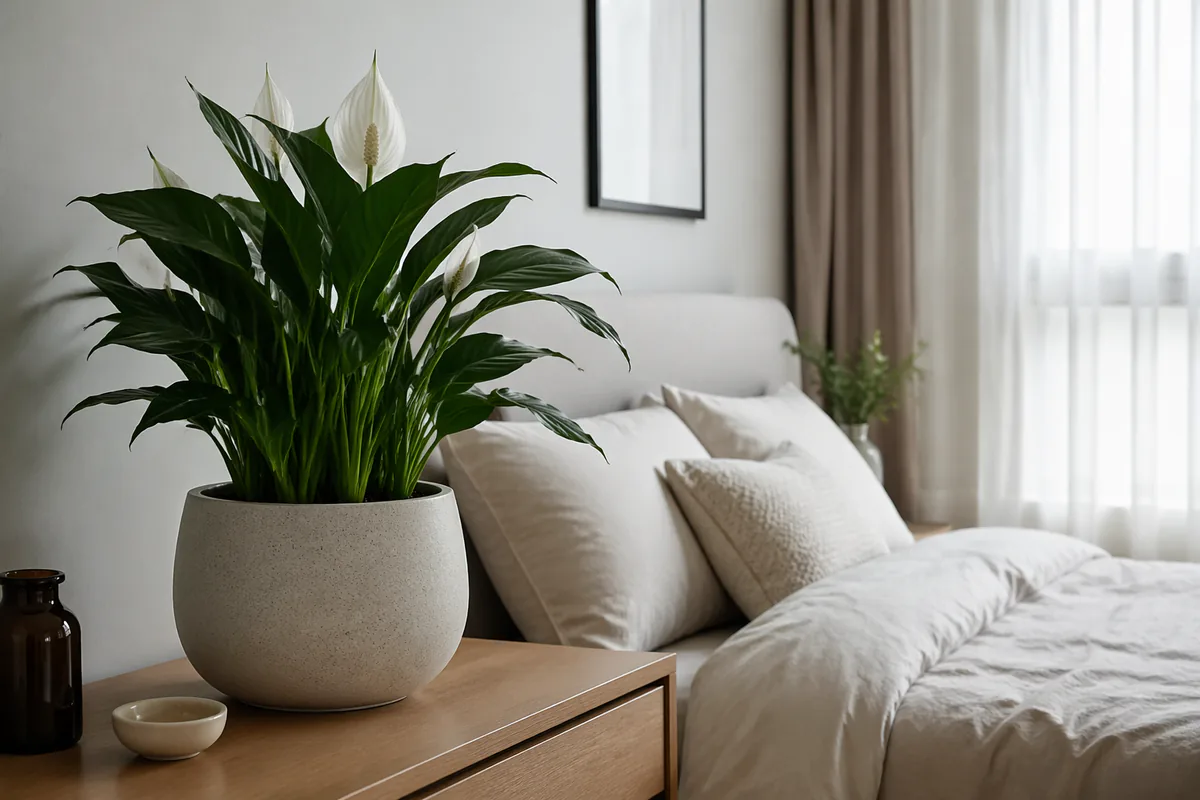
Peace Lily
Spathiphyllum wallisii
Its smaller catalog footprint and low-light tolerance make it strong for bedrooms and compact rooms, especially if you want flowers.
Difficulty: Easy
Light: Bright indirect
Water: Frequent
Pets: Toxic
Bedrooms, medium-size corners, and beginners who want a plant that clearly signals thirst.
Peace Lily is toxic to pets and also wants frequent watering, so it is not a low-effort pet-home pick.
Habit: Self-standingTolerates: Low, MediumCatalog size: 60 x 50 cmMaintenance: Low
View in plant library
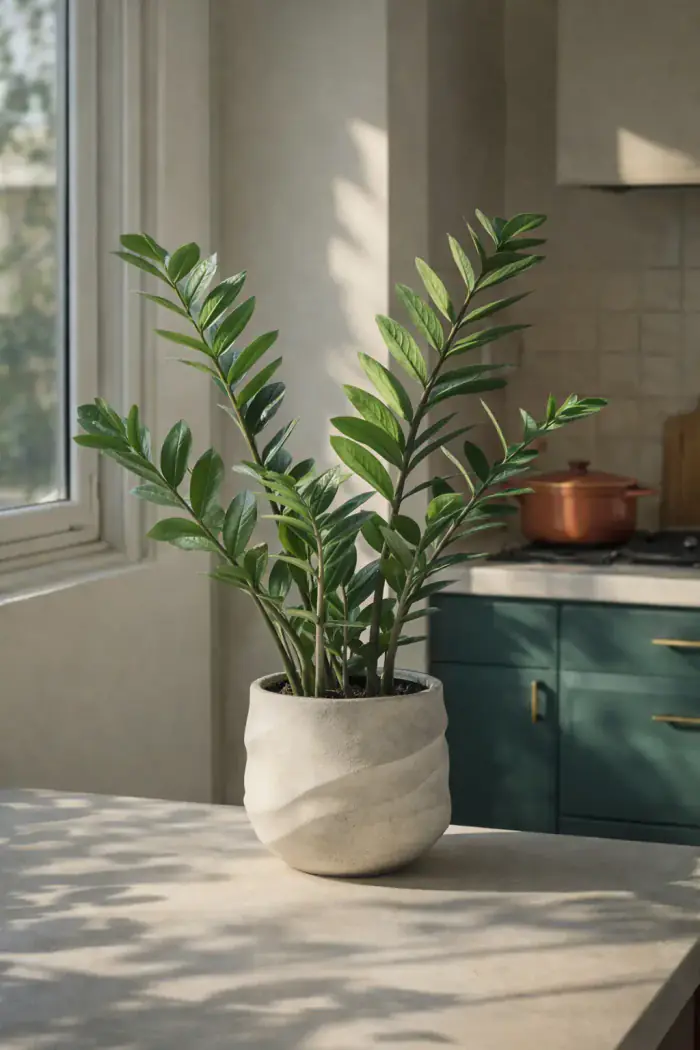
ZZ Plant (Zanzibar Gem)
Zamioculcas zamiifolia
Rare watering and broad light tolerance make it one of the safest recommendations for people with inconsistent routines.
Difficulty: Easy
Light: Bright indirect
Water: Rare
Pets: Toxic
Busy schedules, darker rooms, and plant owners who want a tidy self-standing shape instead of a trailing vine.
Zanzibar Gem is toxic to pets, and it is a slow grower if you expect fast visual payoff.
Habit: Self-standingTolerates: Low, Medium, DirectCatalog size: 90 x 60 cmMaintenance: Low
View in plant library
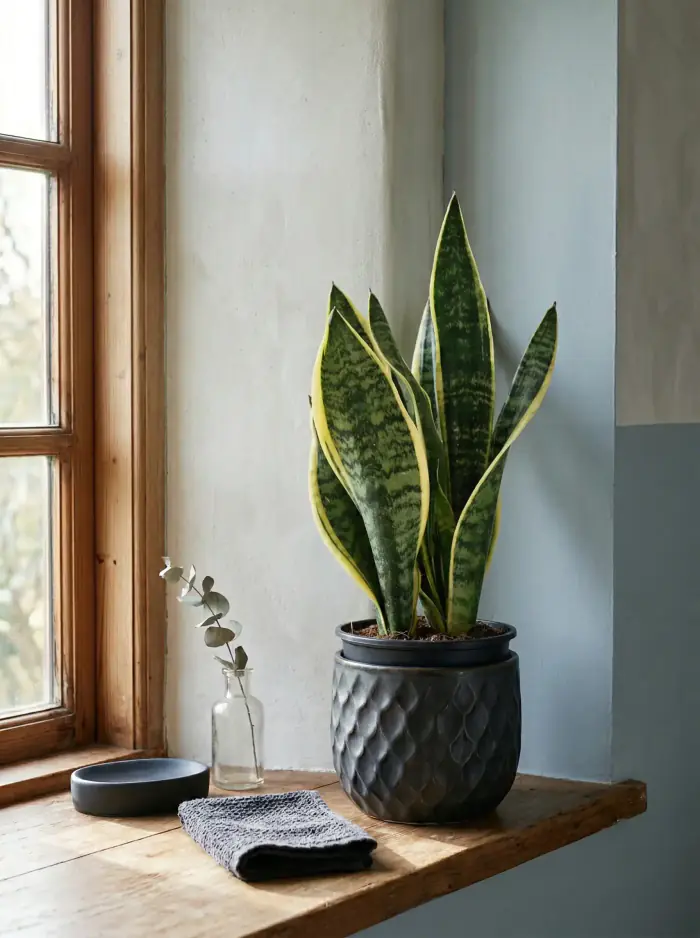
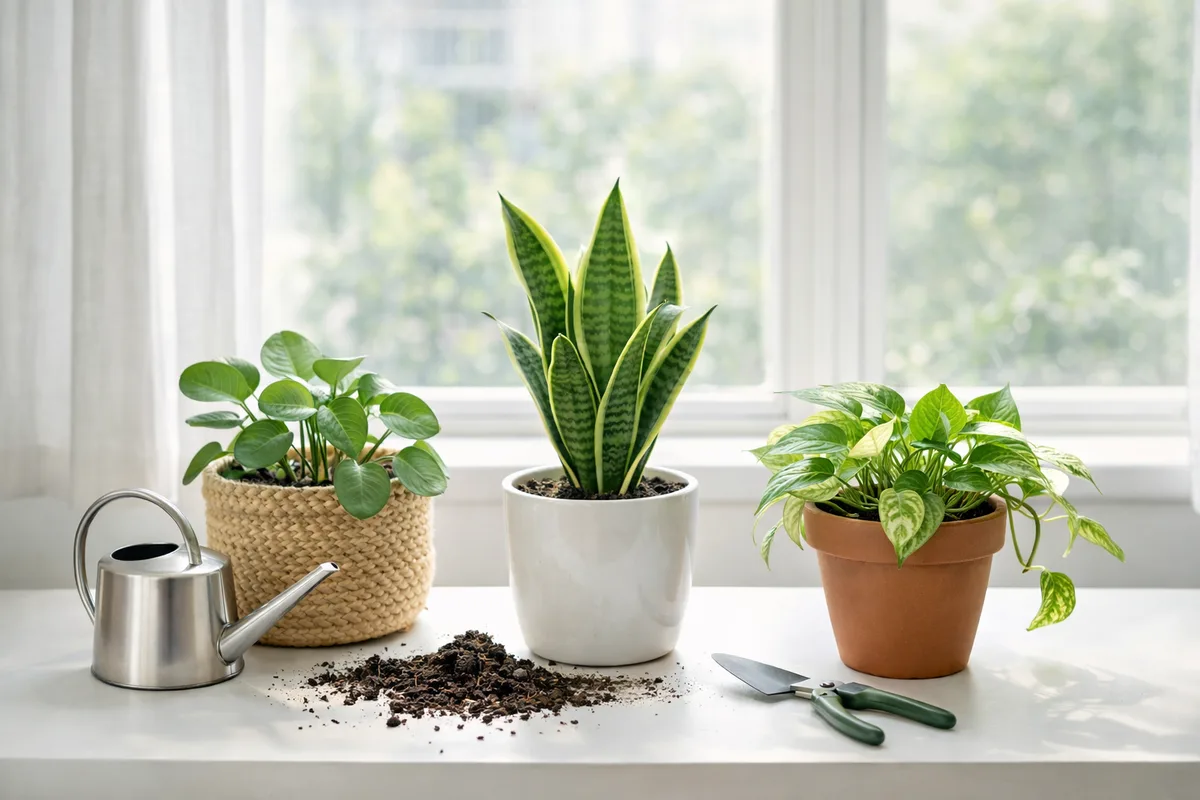
Snake Plant
Dracaena trifasciata
Low-maintenance and rare-watering, so it gives beginners more room for error than most foliage plants.
Difficulty: Easy
Light: Bright indirect
Water: Rare
Pets: Caution
Narrow floor space, inconsistent watering, and homes that only get low to medium light.
Snake plant is mildly toxic to pets, so it is not the right first pick for chewers.
Habit: Self-standingTolerates: Low, MediumCatalog size: 120 x 30 cmMaintenance: Low
View in plant library
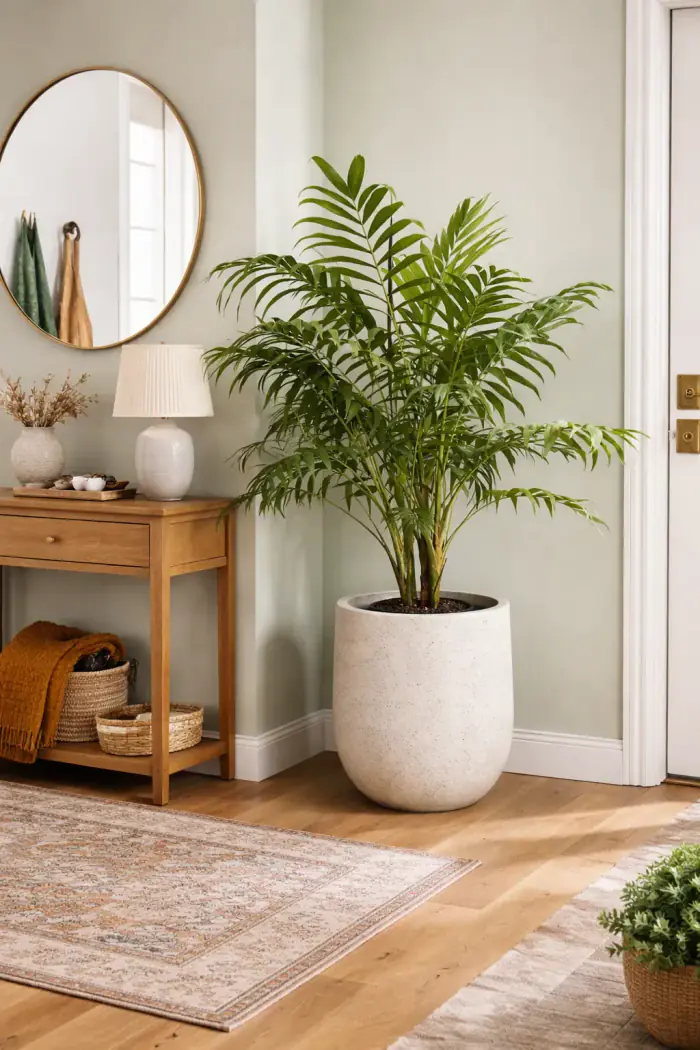
Parlor Palm
Chamaedorea elegans
It is one of the most versatile non-toxic catalog picks because it stays beginner-friendly while tolerating low or bright indirect light.
Difficulty: Easy
Light: Medium
Water: Moderate
Pets: Safe
Pet-safe homes, low-light bedrooms, and people who want a softer upright plant without constant pruning.
Its width can still reach about 100 cm in the catalog, so it is better for corners than for tiny tabletops.
Habit: Self-standingTolerates: Low, Bright indirectCatalog size: 200 x 100 cmMaintenance: Low
View in plant library
Quick Matches
How to split low-light picks by room type
Low light is not one single category. Use the plant shape and watering pace to narrow the list further.
Darkest corner
Cast Iron Plant is still the clearest true low-light specialist, with Peace Lily as the softer-looking option if you can handle more frequent watering.
Forgetful routine
ZZ Plant and Snake Plant stay safer when you want rare watering instead of moisture-dependent care.
Want a softer look
Parlor Palm works when you still want low-light tolerance but prefer a palm silhouette over rigid upright leaves.
Avoid These Mistakes
What weakens most low-light guides
The fastest way to ruin a low-light article is to recommend plants that only look good under light levels the page never admits you need.
Treating low light as a styling category
A plant still needs enough usable daylight to stay alive. Low light does not mean no-light decor.
Using bright-indirect defaults
If a plant only prefers bright indirect light and barely tolerates shade, it should not anchor a low-light article.
Forgetting slower dry-down
Lower light usually means less water use, so frequent-watering plants become riskier in dim rooms.
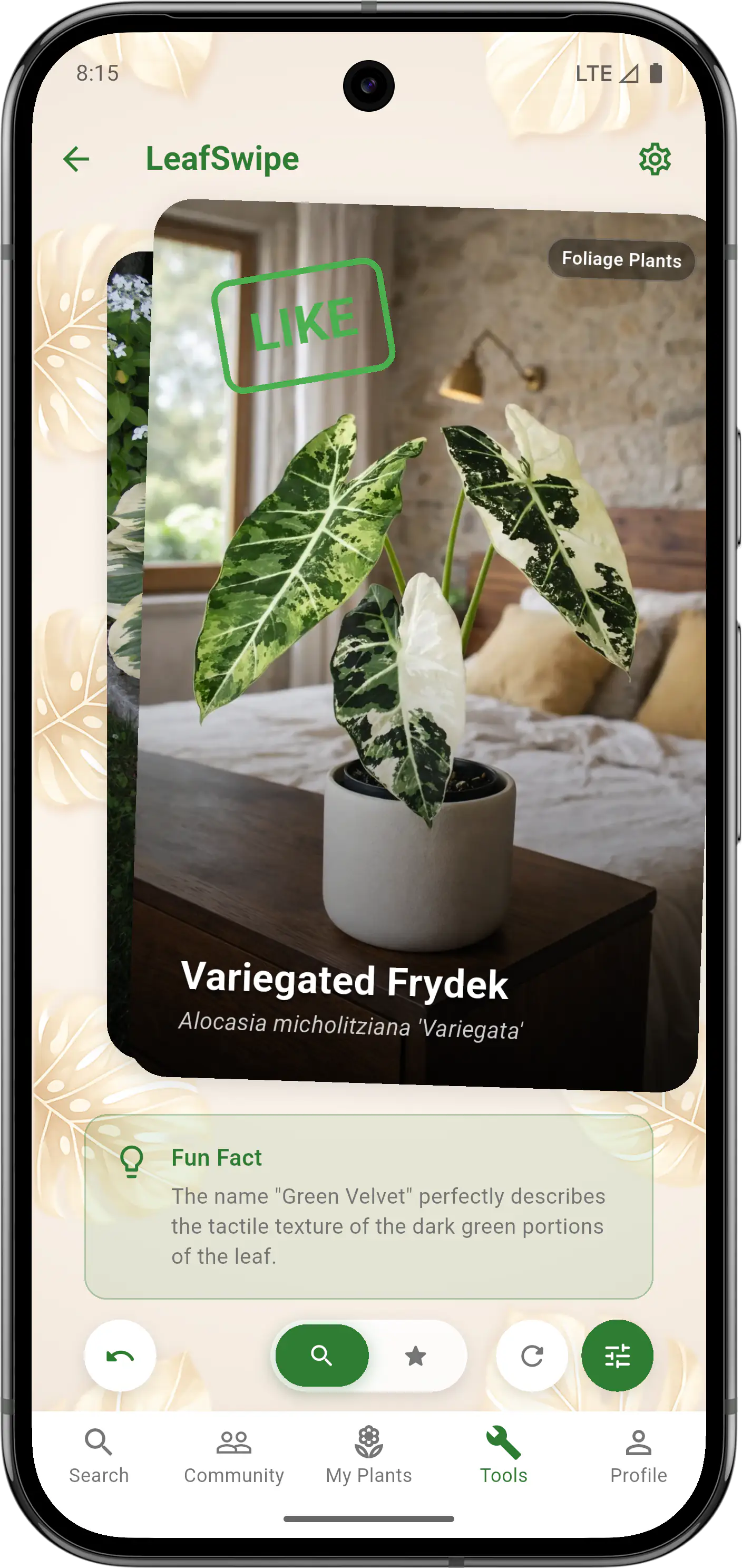
LeafSwipe
Find Plants That Fit Your Home and Routine
Use LeafSwipe to compare plants quickly, save your favorites, and choose options that match your light and time.
Find options quickly
Compare plant ideas in seconds when you want new options.
Pick plants that fit
Care previews help you choose plants that match your light and routine.
Save your favorites
Keep a short list so your next plant decision feels easier.



Frequently Asked Questions
The strongest low-light picks in this catalog are Cast Iron Plant, Peace Lily, ZZ Plant, Snake Plant, and Parlor Palm because they stay more believable as indoor low-light recommendations than brighter, fussier alternatives. Pick the option that fits your light, schedule, and room setup, because fit matters more than trends.
Some can tolerate it for a while, but low light still needs usable daylight. If the room is consistently very dark, growth slows hard and presentation drops.
Usually yes. Dimmer rooms slow dry-down, which is why rare- or moderate-watering plants tend to outperform moisture-hungry picks in low light. Before deciding, check current light, soil moisture, and root condition so your next step is based on what is actually happening.
If the room barely gets daylight, a grow light is often better than forcing a bright-indirect plant into a low-light article just to fill the list. Before deciding, check current light, soil moisture, and root condition so your next step is based on what is actually happening.
Plantology
Find Your Next Favorite Plant
Use LeafSwipe to discover and compare plants that fit your space, light, and daily routine.
- Find matching plants faster
- Compare care needs easily
- Save favorites for later