Core care
Light
Bright Indirect
Keep it near a bright window. Avoid harsh midday sun.
Tolerated
Preferred
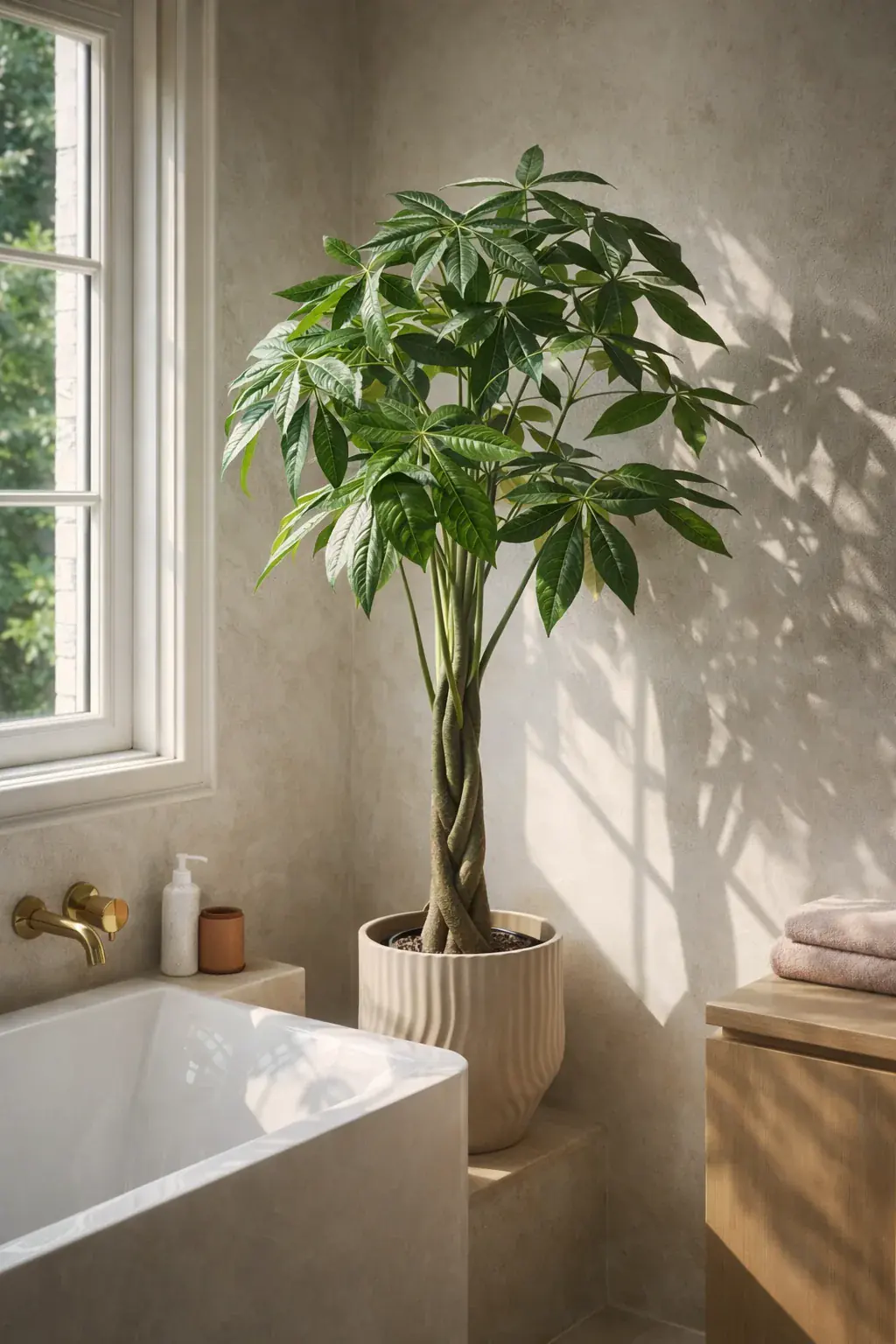
Pachira aquatica
Also known as: Guiana Chestnut, Malabar Chestnut, Hazo be, French Peanut
Money Tree grows best in bright indirect light - water when the top layer has dried, and avoid constantly wet soil, which is a common cause of problems.
Core care
Keep it near a bright window. Avoid harsh midday sun.
Water every 7-14 days. Let top 2-5 cm dry first. Adjust for season and light.
Use All Purpose so water moves through the root zone quickly and does not sit around the roots.
Very forgiving and easy to manage. Tolerates inconsistent care and adapts to a wide range of indoor conditions.
Safety
Maintenance
Use a balanced fertilizer during the growing season and pause when growth slows. About every 12-24 days, adjusting for season and drying speed.
Clean foliage gently whenever dust builds up so the leaves can photosynthesize efficiently.
As needed is the right time to trim away faded flowers and tired growth.
Environment
Keep temperatures stable and protect the plant from sharp swings, frost, or direct heat.
Normal indoor humidity is usually enough.
Botanically, Money Tree is native to Central and South America, from Mexico to northern Brazil and reflects that origin in its growth preferences. Field observations place it in warm woodland edges and open sites with seasonal rainfall, with its white flowers and foliage remaining central to identification. By the 20th century, the species had shifted from regional cultivation to broader commercial production as horticulture scaled globally. Its structured habit makes it a common feature in modern landscape design, from small courtyards to larger border plantings. That reliability-to-impact ratio is the reason it continues to hold a stable place in modern plant collections.
The braided trunk technique was invented in Taiwan in the 1980s and made it a global phenomenon.
In feng shui, the five leaves represent the five elements: wood, fire, earth, metal, and water.
Produces large edible nuts in the wild, though indoor plants rarely flower or fruit.

Money Tree is generally considered a Easy plant, and money tree care works best with steady, repeatable routines. The most important foundations are giving it the right light, letting water move through the soil properly, and adjusting care when the season changes. As a perennial plant, it follows a predictable yearly rhythm that is easier to manage once you understand its active season and rest period. Expect a medium growth rate rather than explosive growth, so good care shows up as stronger foliage, cleaner buds, and more reliable flowering. With a stable routine and small seasonal adjustments, this plant becomes much easier to manage and more rewarding over time.
Money Tree prefers Bright Indirect light, which usually means a bright position with enough energy to support healthy stems and flowers. Target roughly 1000-10000 lux of light intensity for consistent growth. Use this as a practical target, then adjust by watching leaf color and flowering response. It can also tolerate Medium conditions, but that should be treated as a buffer rather than the ideal every day setup. If growth looks stretched or flowering is sparse, the first adjustment should usually be a brighter placement rather than more water or fertilizer. For outdoor growing, morning sun or a bright open site with some airflow often gives the best balance of strong light and manageable heat. This section also addresses money tree light requirements with practical, real-world care adjustments.
Money tree yellow leaves? Most Money Tree problems trace back to light mismatch, watering imbalance, or poor drainage. Start with those checks, then use symptom-specific troubleshooting below. Water regularly and let only the top layer dry slightly before the next deep watering. About every 7-14 days, adjusting for season and drying speed. Tap water sensitivity: Tolerant. The goal is to keep the roots hydrated without letting the soil stay soggy, because persistent wetness is one of the fastest ways to create root or corm problems. If you are using the top dry method, water thoroughly and then let excess moisture drain away instead of leaving the plant sitting in water. Water storage category is moderate, so avoid forcing a constant moisture level when the plant naturally prefers wet-dry cycles. When dormancy begins, reduce watering sharply so the resting plant is not forced to sit in moisture it no longer needs. None This section also addresses how often to water money tree with practical, real-world care adjustments.
Use All Purpose so water moves through the root zone quickly and does not sit around the roots. Aim for soil pH around 6.0-7.5. A loose, airy structure is especially helpful because it gives the roots oxygen and lowers the risk of rot after rain or watering. Repot Every 2-3 years or whenever the root zone becomes crowded, the soil collapses, or drainage noticeably slows down. Root aggression is generally moderate, which helps estimate how quickly the root zone can outgrow its container or bed. Whenever you replant or divide it, handle the roots or corms gently and avoid burying them in a heavy, soggy mix that stays cold and wet for too long. This section also addresses best soil for money tree with practical, real-world care adjustments.
Money Tree can be grown indoors or outdoors, but consistency in light and drainage matters in either setting. Indoors, place it where brightness is reliable and avoid frequent moves between very different light levels.
Use a balanced fertilizer during the growing season and pause when growth slows. About every 12-24 days, adjusting for season and drying speed. Clean foliage gently whenever dust builds up so the leaves can photosynthesize efficiently. As needed is the right time to trim away faded flowers and tired growth. A practical cleaning rhythm is monthly, adjusted for dust, rain splash, and pest pressure. These maintenance jobs work together: feeding supports new growth, cleanup reduces disease pressure, and pruning keeps the plant focused on healthy stems, buds, or foliage instead of tired material.
Keep temperatures stable and protect the plant from sharp swings, frost, or direct heat. Hardiness is roughly 10-32°C (USDA Zone 10-12). Normal indoor humidity is usually enough. Draft tolerance is low; avoid placing it where repeated hot/cold gusts hit leaves directly. This plant usually copes well with average conditions as long as air circulation stays good and the roots are not constantly wet. Stable climate matters more than chasing perfection every day, so focus on avoiding prolonged extremes rather than trying to micromanage every shift in weather. This section also addresses money tree temperature and humidity with practical, real-world care adjustments.
Money Tree is considered Non-Toxic for pets and Non-Toxic for humans. That means placement matters just as much as care, especially if curious pets or children can reach leaves, blooms, bulbs, or corms. Wear gloves if you are sensitive to sap or handling plant material regularly, and wash hands after pruning or dividing. If accidental ingestion happens or irritation develops, contact a vet or medical professional promptly and bring the plant name with you.
Money Tree has a medium growth habit and typically reaches about 200 cm tall and 100 cm wide. Money Tree typically grows with a self-standing habit. Use this to plan support, spacing, and overall display. Flowering usually happens in Irregular, often with White blooms, so this is the period when good light and timely feeding are most rewarding. Dormancy is a normal part of the plant's cycle: None. The key is to treat that slowdown as rest, not as a sign that the plant needs more water or fertilizer. Once you understand this rhythm, it becomes much easier to tell the difference between a true problem and a healthy seasonal change.
Practice with bite-sized plant quizzes in the Plantology app.
Diagnose symptoms and get guided help with Plant Doctor in the Plantology app.
Stem Cutting, Seed.
Cuttings root in water or soil in 3-6 weeks. Seeds germinate in 1-2 weeks when kept warm and moist.
Overwatering causes stem rot easily due to thick, water-storing trunk. Old seeds have poor germination.
Spring and early summer are best. Allow soil to dry between waterings.
Track care schedules, troubleshoot issues faster, and discover more plants without leaving the Plantology ecosystem.
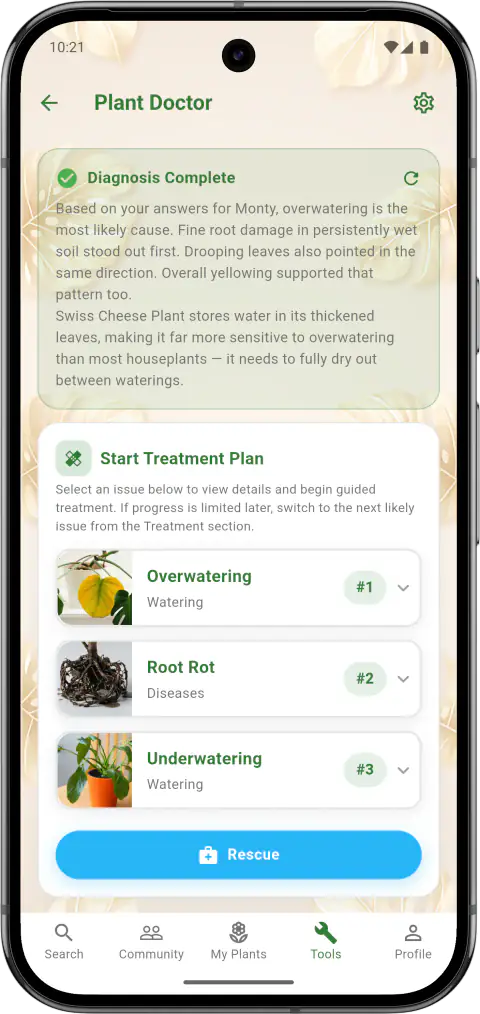
Diagnose pests, yellow leaves, root rot, and other common problems with step-by-step guidance that helps you act quickly.
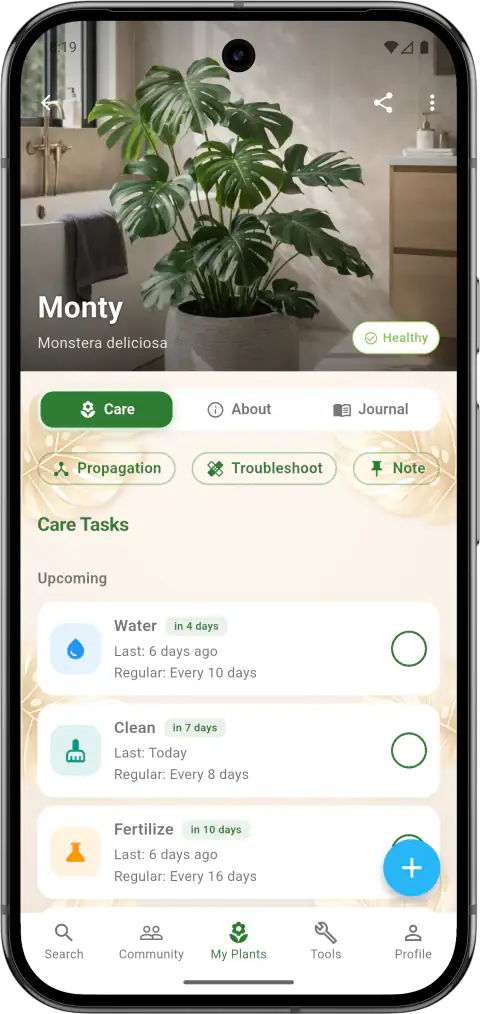
Track watering, fertilizing, repotting, and seasonal maintenance with reminders that keep your care routine consistent.

Discover new plants, compare care profiles, and save favorites when you want fresh ideas for your next addition.
Most Money Tree problems trace back to light mismatch, watering imbalance, or poor drainage. Start with those checks, then use symptom-specific troubleshooting below.
Most Money Tree problems trace back to light mismatch, watering imbalance, or poor drainage. Start with those checks, then use symptom-specific troubleshooting below.
Money Tree Care is easiest when you keep light, watering, and soil balanced and adjust care as seasons change.
Money Tree Care is easiest when you keep light, watering, and soil balanced and adjust care as seasons change.
Money Tree grows best in Bright Indirect light and can tolerate medium conditions. Keep light consistent for stronger growth and flowering.
Water regularly and let only the top layer dry slightly before the next deep watering. About every 7-14 days, adjusting for season and drying speed. Tap water sensitivity: Tolerant. Adjust frequency to season, heat, and how fast the soil dries in your space.
Money Tree is listed as Non-Toxic for pets and Non-Toxic for humans. Keep it out of reach when ingestion is a concern.
Money Tree does best in All Purpose with a pH around 6.0-7.5. Fast drainage lowers root-rot risk.
 Plantology
Stay on top of watering, diagnose problems faster, and keep discovering better ways to care for every plant you grow.