Jumping white or gray specks
Movement is spring-like when the soil is disturbed.
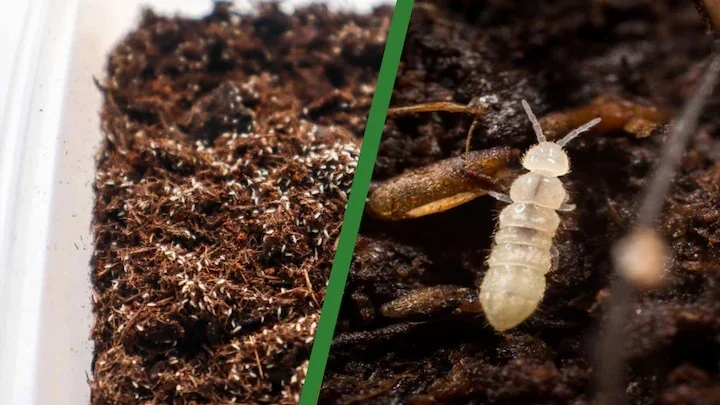
Why are there springtails in my soil usually points to damp soil and organic buildup, and while springtails are often harmless, large swarms can stress seedlings and signal wet root-zone habits.
⚡ Quick Answer
Most likely cause: Springtails in damp soil
Most often appears when moist topsoil and organic debris create a stable habitat.
Start with what you can clearly see right now before changing treatment or care variables.
Movement is spring-like when the soil is disturbed.
You see more activity right after watering.
Very young tissue can show tiny pits in heavy infestations.
Springtails often increase where fungal growth is present.
Inspect these locations before locking your diagnosis.
Springtails are easiest to spot during active moisture periods.
Organic material provides food and shelter.
Humid, protected corners often hold the highest counts.
Tender young tissue is where damage appears first when pressure is high.
Use this quick contrast to reduce misdiagnosis before treatment.
Soil mites crawl; springtails usually jump when disturbed.
Thrips damage leaves with silver streaking; springtails stay mostly in soil.
Gnat adults fly and larvae are worm-like, while springtails hop.
Choose the closest driver first, then run one correction at a time.
What it looks like: Soil stays moist at the surface for days.
Why it happens: Springtails need moisture-rich habitat to multiply.
First correction: Isolate, clean visible activity, and begin repeat treatment cadence.
What it looks like: Old residue and mold appear in the pot.
Why it happens: Springtails feed on fungal and decaying material.
First correction: Isolate, clean visible activity, and begin repeat treatment cadence.
What it looks like: Pots are crowded and air movement is weak.
Why it happens: Slow drying supports stable springtail activity.
First correction: Isolate, clean visible activity, and begin repeat treatment cadence.
What it looks like: Swarms are noticed only after populations build.
Why it happens: Without checks, habitat conditions go uncorrected.
First correction: Isolate, clean visible activity, and begin repeat treatment cadence.
Before you treat, run these checks to confirm you are targeting the right problem.
Disturb topsoil gently
Tiny specks jump instead of flying up like gnats.
Place a sticky card near soil
You catch jumpers near the base rather than leaf-level flyers.
Check leaves for silver streaking
If streaking is absent, thrips are less likely.
Recheck after dry-down
Numbers drop when the top layer is allowed to dry more fully.
Follow the sequence without skipping repeat cycles.
Dry the surface layer
Delay watering until the upper mix is clearly drier than before.
Clean the pot surface
Remove dead leaves and organic residue that feed springtails.
Increase airflow
Open plant spacing so humidity pockets do not linger around pots.
Refresh dense substrate
Repot if old media keeps staying wet and compacted.
Use targeted support
Apply mild controls only if high numbers persist after habitat correction.
Track every 3 to 5 days
Confirm the count is dropping before adding more interventions.
⚠ Escalate quickly if you notice:
Use these habits to reduce reinfestation risk and catch activity early.
Check topsoil dryness weekly
Dryer surface cycles naturally suppress springtail buildup.
Clean debris routinely
Less decomposing material means less food for springtails.
Ventilate plant clusters
Better airflow improves drying and lowers humidity pockets.
Audit watering habits seasonally
Growth and dry-down speed change with light and temperature shifts.
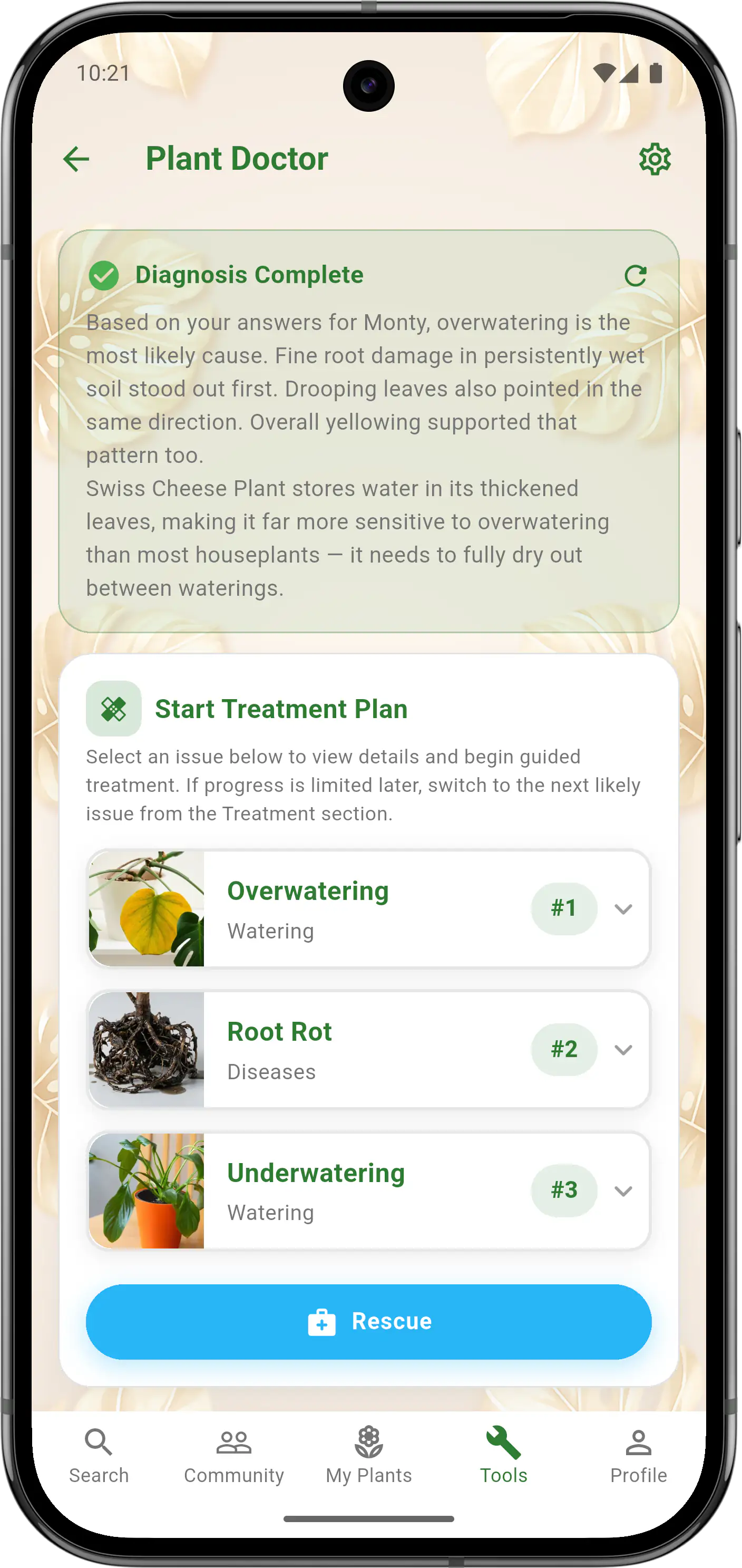
Plant Doctor
Plant Doctor helps separate springtails from mites and gnats so your root-zone fixes stay simple and targeted.
Helps you spot patterns you might miss when symptoms overlap.
Uses recent care history and symptom changes to narrow likely causes.
Supports observation over time so fixes stay consistent and practical.
📋 Related Resources
Explore all 20 pages by category.
Open species-level care pages.
Reference a full profile with ranges and schedules.
Go to the app area that helps most with this guide topic.
Compare jumping versus crawling soil pests.
Differentiate springtails from fungus gnats.
Why are there springtails in my soil usually means your mix stays damp and rich in decaying material. Springtails thrive in those conditions and gather near the soil surface.
Springtails are often mild and many feed on fungi and debris, not healthy leaves. Problems usually show when populations are high and seedlings are already vulnerable.
Springtails usually jump when disturbed and stay near soil. Thrips are mostly on leaves, and fungus gnat adults fly around the pot area. A simple way to do this is to check light and soil moisture first, then track the result for 7 to 14 days.
Here is the simplest way to start. Dry the top soil layer more between waterings and remove debris on the surface. Most springtail activity drops quickly once damp habitat conditions are corrected.
 Plantology
Use Plant Doctor to identify likely pests and follow practical treatment steps that are easier to stick with.