How to fertilize indoor plants becomes more reliable when you use measurable ranges and repeatable routines instead of generic tips.
How to Fertilize Indoor Plants

Quick Action Overview
At a glance: what to do first
Feed actively growing plants more often than resting plants.
Use lower concentration with higher consistency instead of strong occasional doses.
Apply to already-moist root zones when possible.
Pause or reduce feeding when growth slows sharply.
Core Explanation
How fertilizing actually works
Fertilizing works best when dose and timing match growth speed, light level, and root-zone moisture.
Growth phase
Active growth periods can use nutrients every 2 to 4 weeks, while low-growth periods often need far less.
Light support
Plants in stronger light can process nutrients faster than plants in low-lux zones.
Root-zone moisture
Very dry roots are more vulnerable to concentration spikes and fertilizer burn.
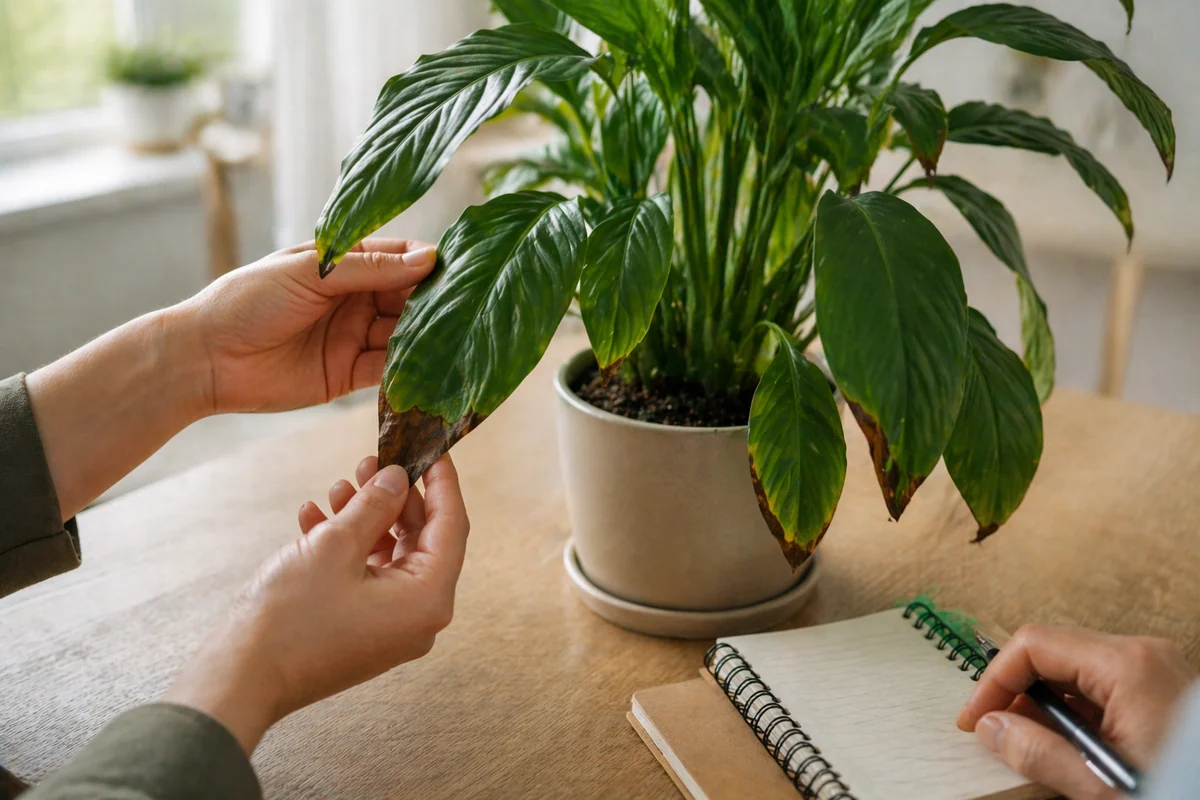
If symptoms overlap, compare brown tips on houseplants and why are my plant leaves turning yellow before making multiple changes.
Step-By-Step System
Build a repeatable fertilizing system
Step 1 - Choose baseline dilution
Start with a conservative liquid-feed concentration.
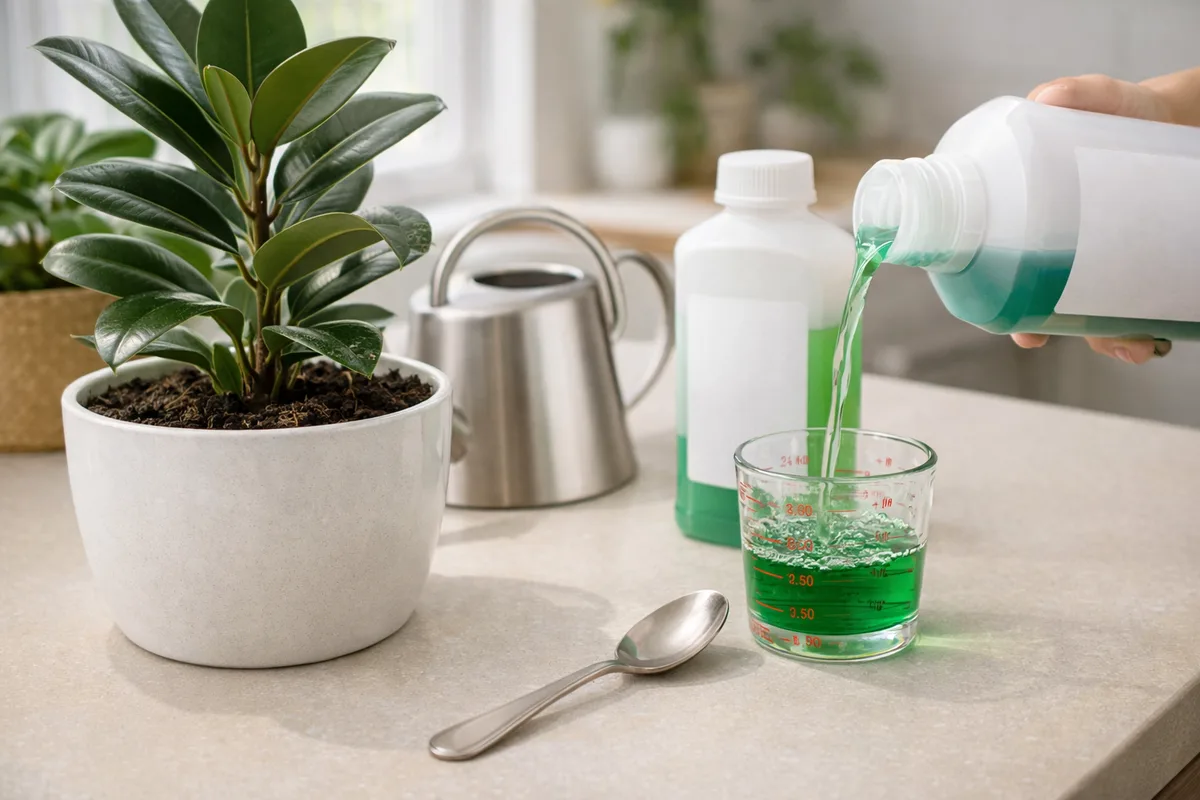
Target range: Use about 1/4 to 1/2 label strength for indoor container plants.
Step 2 - Match cadence to growth
Set interval by active or slow-growth phase.
Target range: Active season: every 2 to 4 weeks. Slow season: every 6 to 8 weeks or pause.
Step 3 - Check moisture before feeding
Avoid feeding severely dry media unless label directs otherwise.
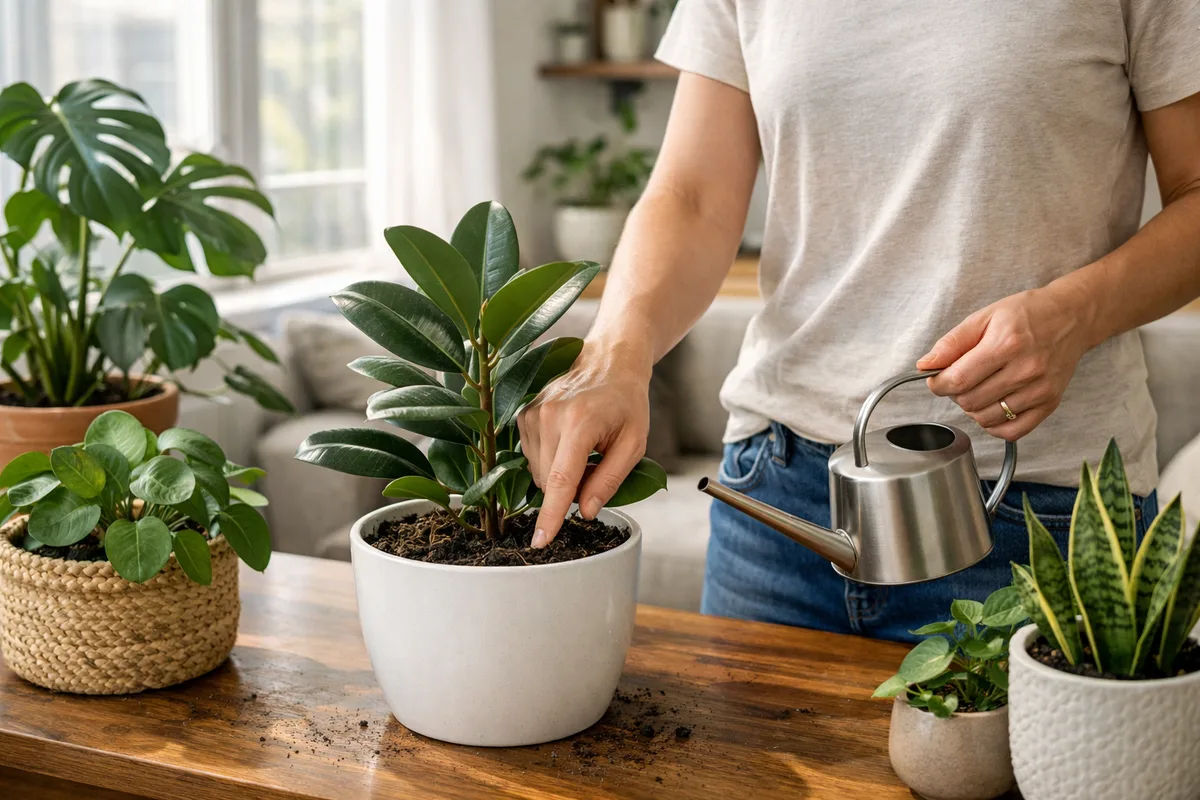
Target range: Feed after a light pre-watering or when mix is lightly moist.
Step 4 - Watch leaf response
Track new growth color, edge condition, and speed.
Target range: Adjust concentration in small 10 to 20% increments only.
Why This Works
Why condition-based fertilizing decisions are more reliable
Most fertilizing problems come from timing mismatches, not effort. When routine and plant demand drift apart, stress builds before symptoms become obvious.
A condition-based approach lowers over-correction. You verify real signals first, then make one change at a time so results are easier to read.
This creates a repeatable system you can adapt through season changes without resetting your entire routine.
Key Variables
Use these variables as your control panel
Growth phase
Active growth periods can use nutrients every 2 to 4 weeks, while low-growth periods often need far less.
Light support
Plants in stronger light can process nutrients faster than plants in low-lux zones.
Root-zone moisture
Very dry roots are more vulnerable to concentration spikes and fertilizer burn.
Common Mistakes
Errors that create avoidable stress
Over-concentrated feeds
Increases risk of salt stress, edge burn, and stalled roots.
Do this instead: Use lower concentration with steady cadence and monitor new growth.
Feeding in low-growth periods
Nutrients accumulate when uptake is slow, especially in low light.
Do this instead: Reduce to every 6 to 8 weeks or pause during clear slow-growth windows.
Feeding dry root zones
Can create local concentration spikes and tissue stress.
Do this instead: Moisten the substrate first, then apply diluted nutrients.
Practical Ranges
Concrete ranges you can apply immediately
Choose baseline dilution
Action
Start with a conservative liquid-feed concentration.
Target range
Use about 1/4 to 1/2 label strength for indoor container plants.
Match cadence to growth
Action
Set interval by active or slow-growth phase.
Target range
Active season: every 2 to 4 weeks. Slow season: every 6 to 8 weeks or pause.
Check moisture before feeding
Action
Avoid feeding severely dry media unless label directs otherwise.
Target range
Feed after a light pre-watering or when mix is lightly moist.
Real Example
Case study: Monstera deliciosa (medium to bright indirect)
Situation
A conservative dilution plus growth-linked timing is usually enough for stable foliage quality.
Mistake
March to September: 1/2-strength liquid feed about every 3 to 4 weeks.
Adjustment
October to February: reduce to every 6 to 8 weeks or pause if growth is minimal.
Result
If brown tip burn appears, reduce dose by around 20% and flush once.
Smart Care
Turn Plant Advice Into a Routine You Can Keep
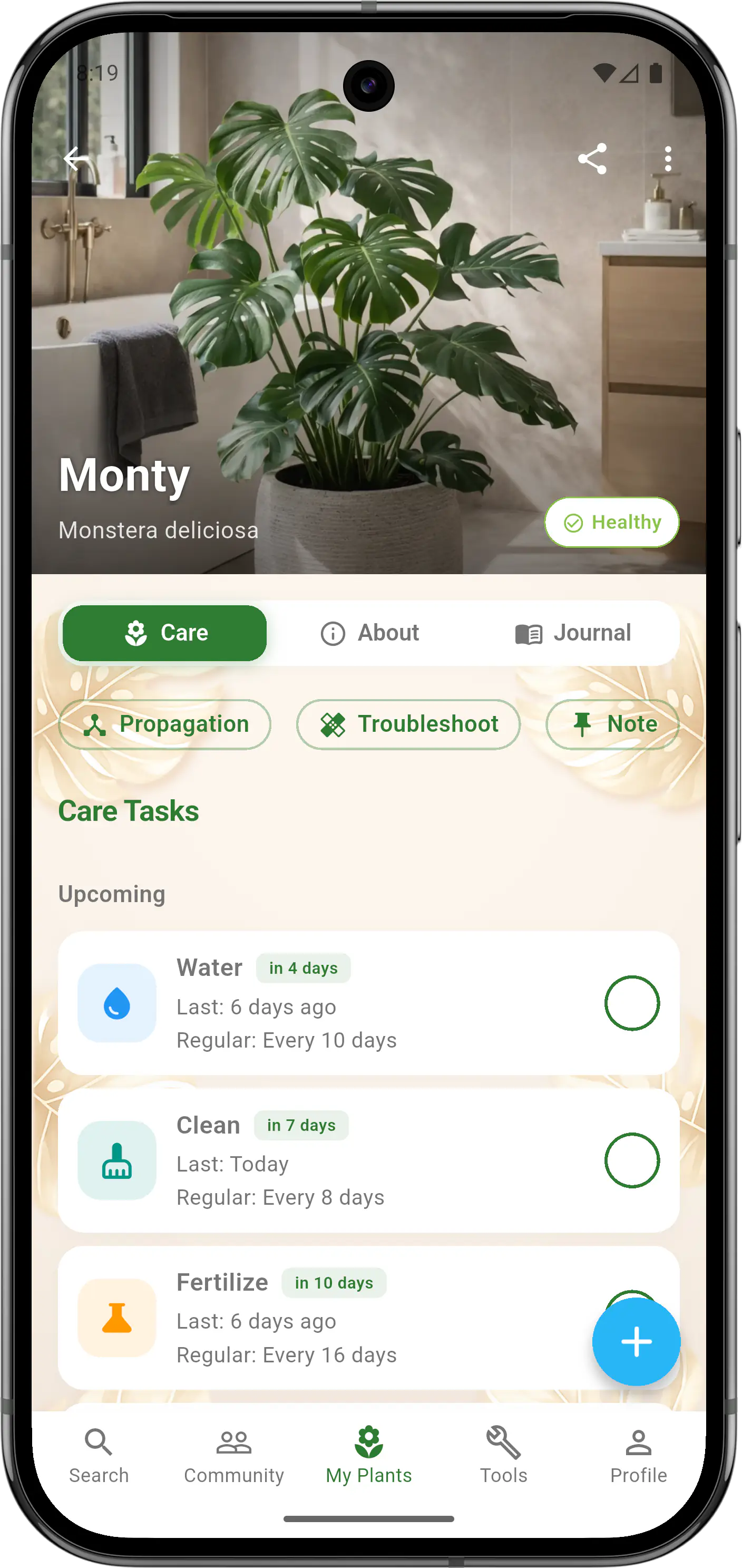
Smart Care helps you stay on track with watering, feeding, and repotting so your plants stay healthier over time.
Stay consistent
Helpful reminders keep watering, feeding, and repotting on track.
See what is working
Care history helps you notice patterns before problems get worse.
Adjust with confidence
Simple guidance helps you improve your routine over time.



Frequently Asked Questions
A practical baseline is every 2 to 4 weeks during active growth and every 6 to 8 weeks, or not at all, during slow-growth periods. A simple way to do this is to check light and soil moisture first, then track the result for 7 to 14 days.
Yes, but usually less often and at lower concentration if growth continues. If growth nearly stops, pausing is often safer. Before deciding, check current light, soil moisture, and root condition so your next step is based on what is actually happening.
Common drivers are overly strong dilution, feeding too frequently, and salt buildup in containers without periodic flushing. Pick the option that fits your light, schedule, and room setup, because fit matters more than trends.
Usually yes for indoor plants in containers. Feeding slightly moist substrate lowers concentration spikes around root tips. Before deciding, check current light, soil moisture, and root condition so your next step is based on what is actually happening.
Plantology
Keep Your Plant Routine Simple and Consistent
Track watering, feeding, and repotting in one place so your plants stay healthier long term.
- Helpful reminders
- Clear care tracking
- Guidance for each plant