Attached bumps on stems
Bumps look shell-like and stay fixed in place.
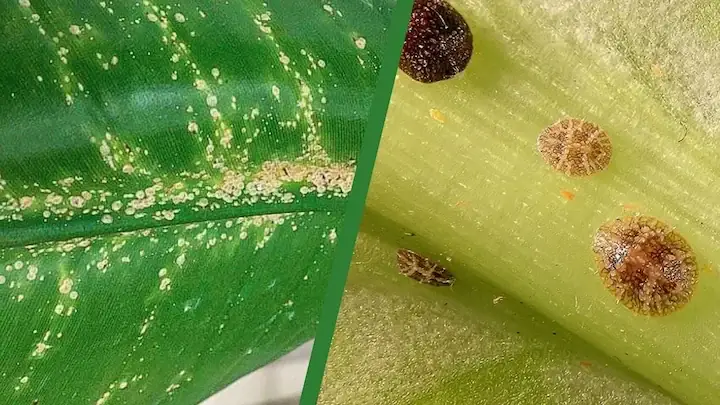
Why are there scale bugs on my plant usually points to hidden sap-feeding colonies on stems and leaf undersides, where hard or soft bumps are easy to miss during quick checks.
⚡ Quick Answer
Most likely cause: Scale insects
Usually appears as attached bumps on stems or leaves that keep returning after wipe-downs.
Start with what you can clearly see right now before changing treatment or care variables.
Bumps look shell-like and stay fixed in place.
Sap-feeding can leave residue and weaken leaf finish.
Plants decline gradually when colonies are missed.
Scale often returns if only surface cleaning is done once.
Inspect these locations before locking your diagnosis.
Scale prefers protected stem surfaces and tight joints.
Undersides hide early colonies from quick top-down checks.
These crevices are hard to reach and often missed.
Cross-spread is common when plants are closely grouped.
Use this quick contrast to reduce misdiagnosis before treatment.
Residue wipes away cleanly and does not return as fixed bump clusters.
Mealybugs look cottony and fuzzy, while scale looks harder and shell-like.
Natural texture is even and stable, not raised pest clusters that spread.
Choose the closest driver first, then run one correction at a time.
What it looks like: Issue is noticed after visible decline and residue.
Why it happens: Scale blends into stems and can be mistaken for texture.
First correction: Isolate, clean visible activity, and begin repeat treatment cadence.
What it looks like: Nearby plants develop similar fixed bumps.
Why it happens: Close spacing makes transfer and misses more likely.
First correction: Isolate, clean visible activity, and begin repeat treatment cadence.
What it looks like: Bumps return after one wipe session.
Why it happens: Immature stages survive without repeated follow-up.
First correction: Isolate, clean visible activity, and begin repeat treatment cadence.
Before you treat, run these checks to confirm you are targeting the right problem.
Gently scrape a bump
If it lifts like a shell and leaves tissue beneath, scale is likely.
Check for cluster pattern
Multiple similar bumps appear near stems, joints, and undersides.
Watch for sticky film
Honeydew-like residue supports active sap-feeding insects.
Recheck after 3 to 5 days
Fresh tiny bumps indicate ongoing population activity.
Follow the sequence without skipping repeat cycles.
Isolate affected plant
Separate the plant so scale does not spread while you treat.
Manual removal first
Wipe or scrape visible bumps from stems and leaf undersides.
Treat thoroughly
Apply full coverage to all likely hiding areas, not only obvious spots.
Repeat consistently
Follow scheduled repeat rounds to catch stages that appear later.
Inspect nearby plants
Check neighboring plants for early bump clusters and residue.
Track rebound risk
Recheck every few days and continue until fresh bumps stop appearing.
⚠ Escalate quickly if you notice:
Use these habits to reduce reinfestation risk and catch activity early.
Run stem-joint checks weekly
Scale often starts in protected stem areas that are easy to miss.
Quarantine all newcomers
Many outbreaks begin from hidden pests on new arrivals.
Include undersides in cleanups
Surface-only wiping misses where scale frequently settles.
Act on first bumps
Early removal is far easier than correcting established colonies.
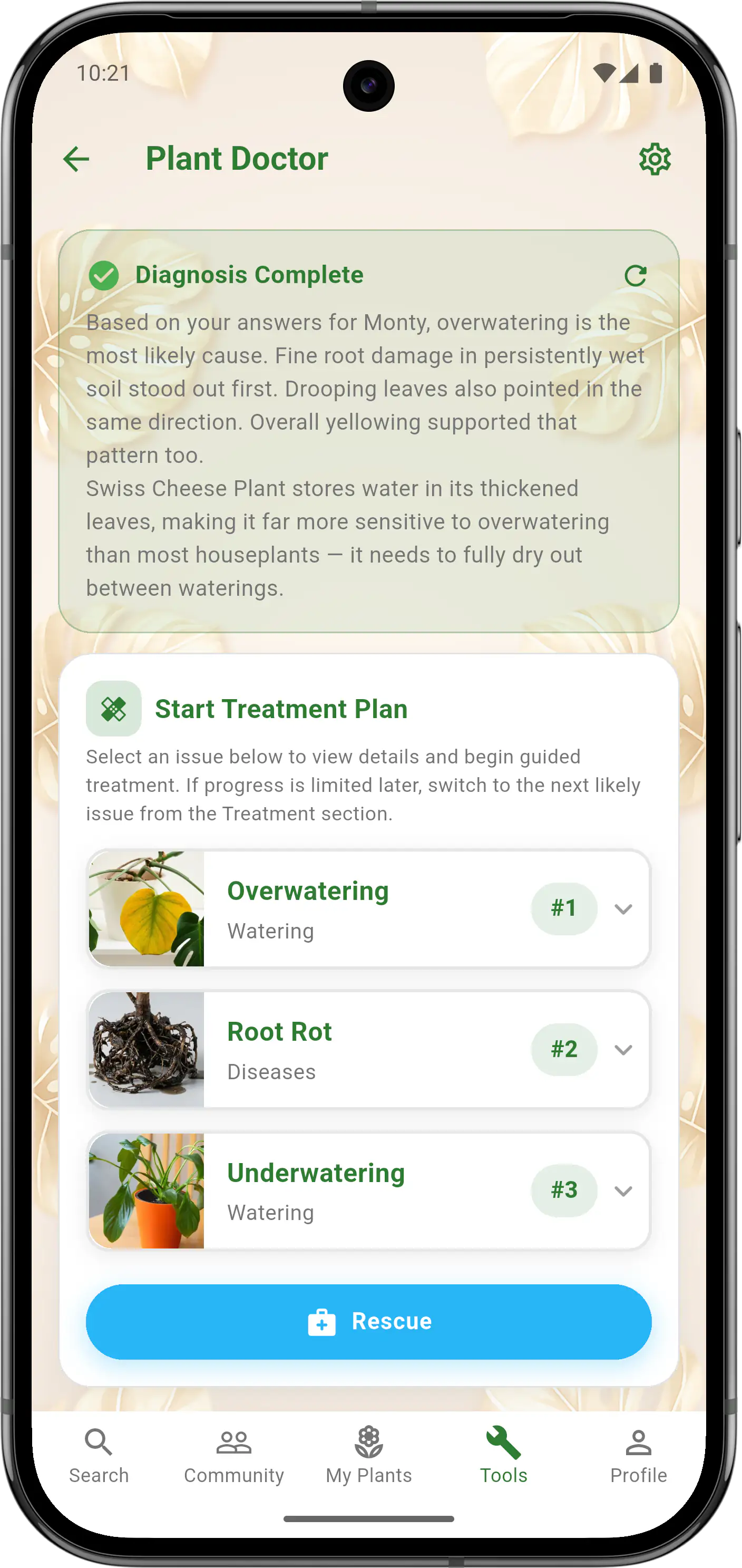
Plant Doctor
Plant Doctor helps compare bump pattern, residue clues, and spread behavior so treatment starts with more confidence.
Helps you spot patterns you might miss when symptoms overlap.
Uses recent care history and symptom changes to narrow likely causes.
Supports observation over time so fixes stay consistent and practical.
📋 Related Resources
Explore all 20 pages by category.
Open species-level care pages.
Reference a full profile with ranges and schedules.
Go to the app area that helps most with this guide topic.
Broader tiny pest ID when bumps are unclear.
Differentiate scale from mealybugs.
Why are there scale bugs on my plant usually means sap-feeding insects have attached to stems or leaf undersides. They often look like tiny brown, tan, or waxy bumps that do not move much.
Scale bumps stay attached and return in the same areas, while dust or mineral residue wipes away cleanly. Gently scraping one bump helps confirm if it is an insect shell.
Start by isolating the plant and manually removing visible scale from stems and undersides. Then follow with a repeat treatment cycle to catch hidden or newly emerged stages.
Yes, scale can return after one cleaning because hidden stages remain in cracks and protected spots. Repeat checks and scheduled follow-up treatment are essential for full control.
 Plantology
Use Plant Doctor to identify likely pests and follow practical treatment steps that are easier to stick with.