Best pet-safe houseplants should start with the catalog pet-safety field, not with vague online lists that mix safe, mildly toxic, and clearly toxic plants together.
Best Pet-Safe Houseplants

Selection Lens
How to shortlist the right plant
Start with plants that are non-toxic in the catalog, then narrow by size, maintenance, and light so the page stays safe and useful.
Pet safety is a hard filter
If the catalog says toxic or mildly toxic, the plant should not appear on the shortlist and force the user to discover that later.
Room fit still matters
A non-toxic plant is not automatically a good recommendation if it becomes too large or too fussy for normal homes.
Keep one easier option in every size band
The page should give users compact, hanging, and upright options without pushing them into hard-care plants.
Top Picks
Best genuinely pet-safe houseplants in the catalog
These picks stay inside the catalog pet-safety boundary while still covering compact, hanging, upright, and patterned foliage options.
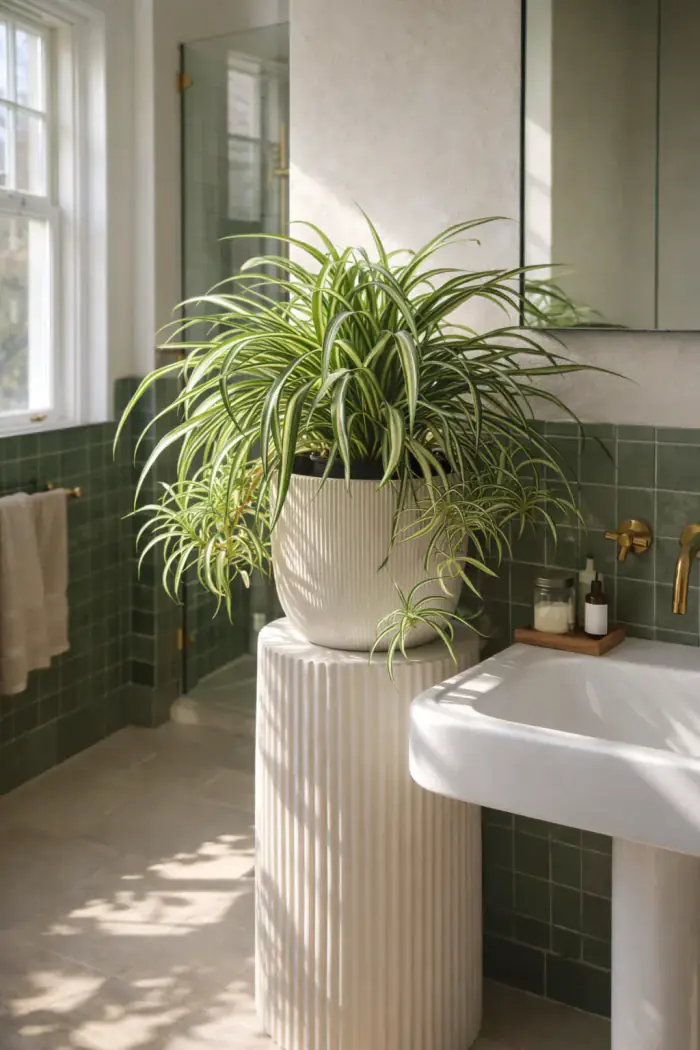
Spider Plant
Chlorophytum comosum
Easy care, pet-safe status, and fast growth make it one of the strongest all-around catalog picks.
Difficulty: Easy
Light: Bright indirect
Water: Moderate
Pets: Safe
Pet homes, hanging spots, and beginners who want quick visual feedback from new plantlets and fresh growth.
It still wants routine watering, and the hanging habit can read messy if you want a strict upright silhouette.
Habit: HangingTolerates: Low, MediumCatalog size: 40 x 60 cmMaintenance: Low
View in plant library
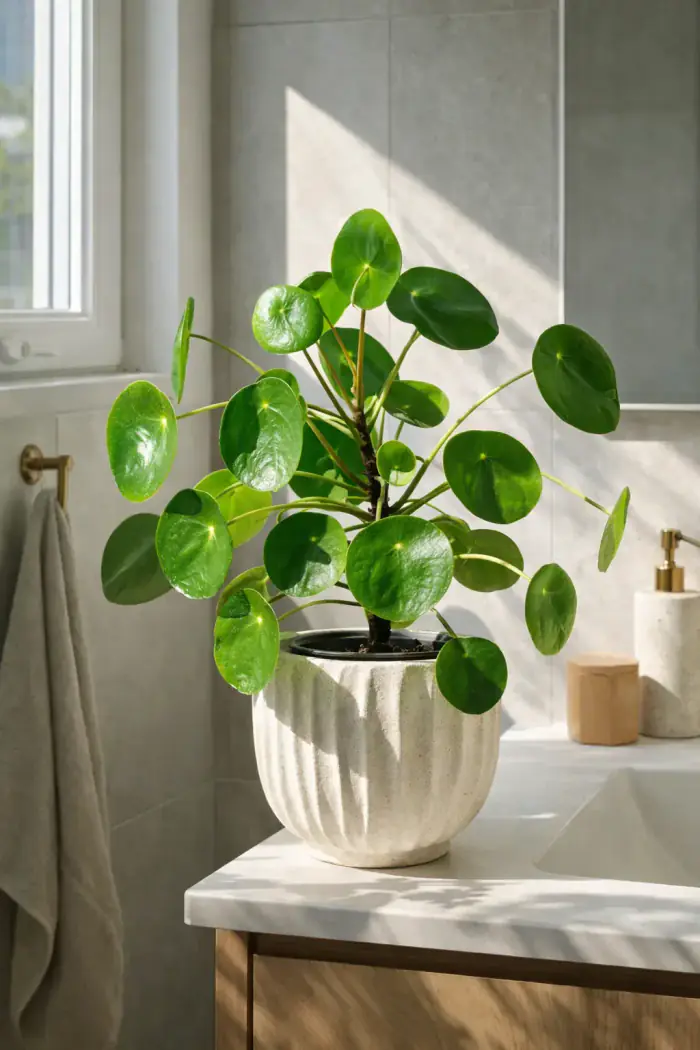
Chinese Money Plant
Pilea peperomioides
Its 30 x 30 cm catalog size makes it one of the clearest true small-space picks in the library.
Difficulty: Easy
Light: Bright indirect
Water: Moderate
Pets: Safe
Desks, side tables, windowsills, and pet homes that need a compact, self-standing plant.
It prefers brighter placements than the low-light picks, so it is not the answer for dark apartments.
Habit: Self-standingTolerates: Low, Bright indirectCatalog size: 30 x 30 cmMaintenance: Low
View in plant library
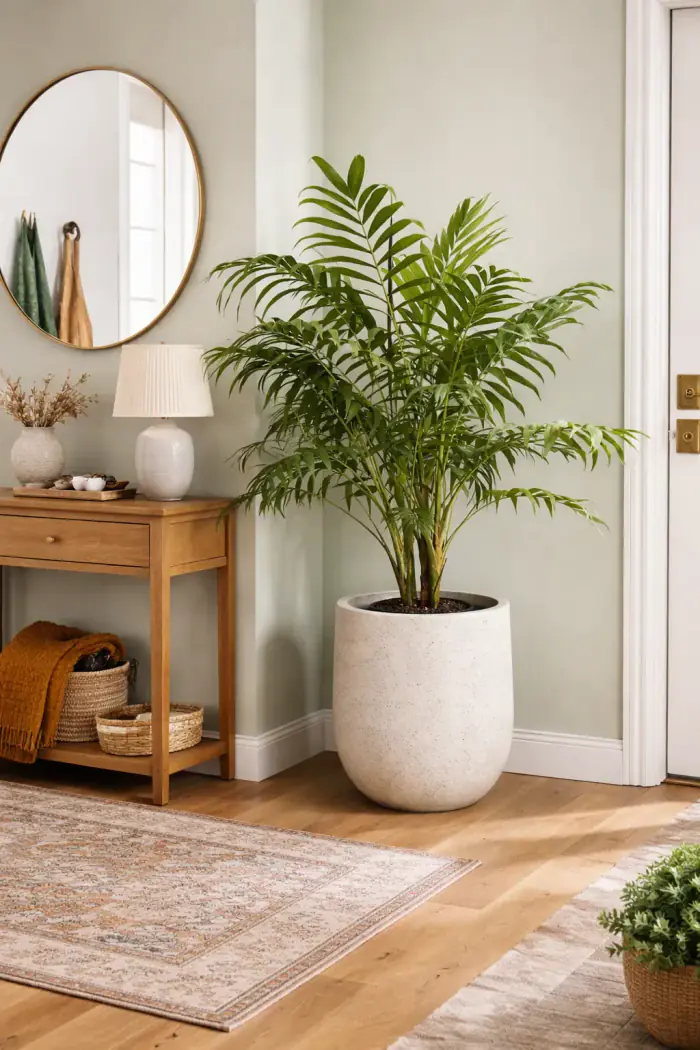
Parlor Palm
Chamaedorea elegans
It is one of the most versatile non-toxic catalog picks because it stays beginner-friendly while tolerating low or bright indirect light.
Difficulty: Easy
Light: Medium
Water: Moderate
Pets: Safe
Pet-safe homes, low-light bedrooms, and people who want a softer upright plant without constant pruning.
Its width can still reach about 100 cm in the catalog, so it is better for corners than for tiny tabletops.
Habit: Self-standingTolerates: Low, Bright indirectCatalog size: 200 x 100 cmMaintenance: Low
View in plant library
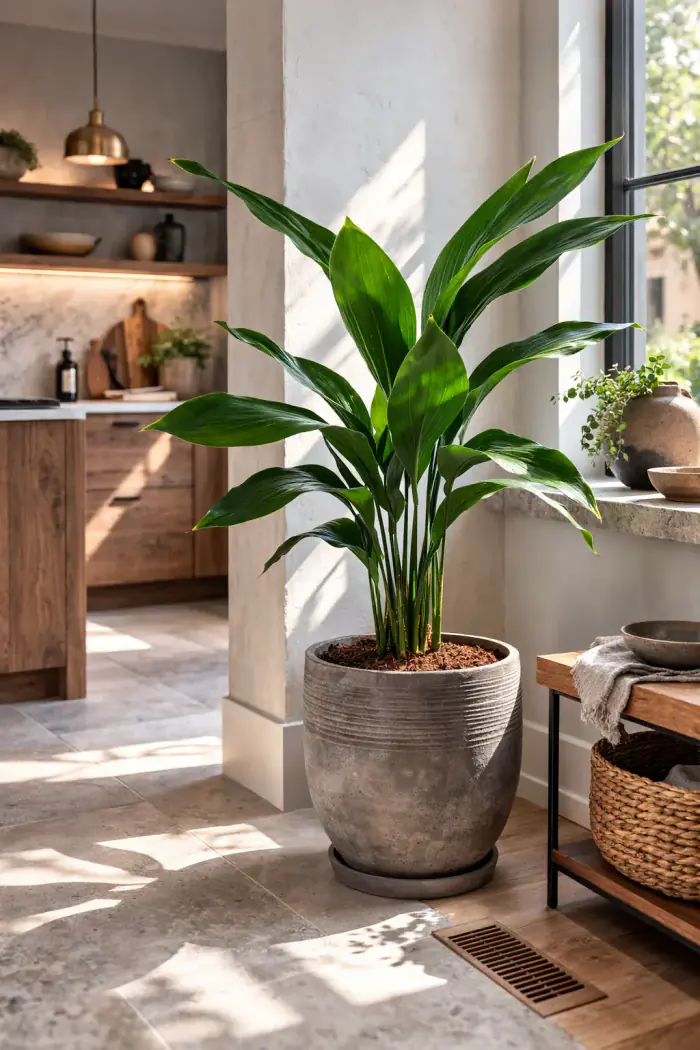
Cast Iron Plant
Aspidistra elatior
If the room is genuinely dim, this is the strongest catalog-backed pick because low light is its preferred zone, not just tolerated.
Difficulty: Easy
Light: Low
Water: Moderate
Pets: Safe
Dark corners, low-light apartments, and pet homes that need a sturdy self-standing plant.
It is more about stability than speed, so do not choose it if you want fast visible growth.
Habit: Self-standingTolerates: MediumCatalog size: 60 x 60 cmMaintenance: Low
View in plant library
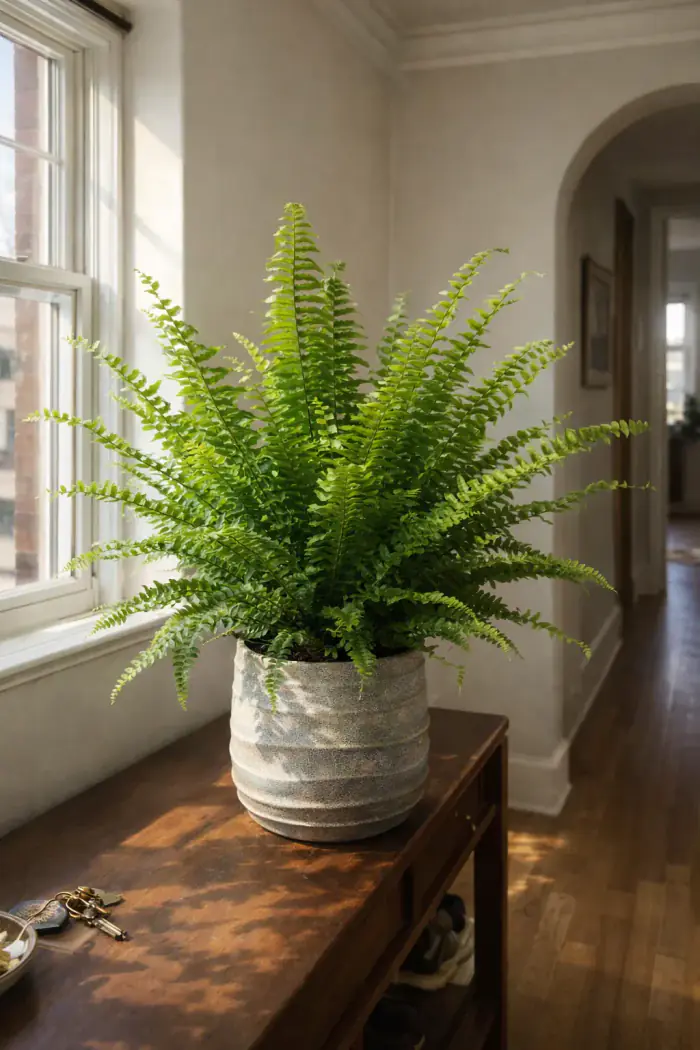
Boston Fern
Nephrolepis exaltata
It brings a softer, classic indoor look and stays pet-safe, which makes it one of the better gentle-shape picks for homes that can keep up with watering.
Difficulty: Moderate
Light: Medium
Water: Frequent
Pets: Safe
Pet-safe rooms, dressers, and shelves where you want lighter texture instead of rigid upright leaves.
It wants more regular watering than the easiest foliage plants, so it is better for attentive routines than forgetful ones.
Habit: ArchingTolerates: Bright indirectCatalog size: 60 x 90 cmMaintenance: Medium
View in plant library
Quick Matches
Which pet-safe plant fits your home best?
Use size and maintenance to narrow the list after you clear the pet-safety filter.
Need the easiest all-rounder
Spider Plant is the strongest default because it stays beginner-level, fast-growing, and non-toxic to pets.
Need a compact tabletop plant
Chinese Money Plant is the clearest small-space pet-safe option thanks to its 30 x 30 cm catalog size.
Want a softer fuller look
Boston Fern works if you want softer volume and can keep up with more regular watering than Spider Plant or Cast Iron Plant need.
Avoid These Mistakes
What makes pet-safe advice unreliable
Pet-safe pages stop being useful the moment they blur the line between safe, mildly toxic, and toxic plants.
Treating mildly toxic as close enough
If the catalog does not say non-toxic, it should not headline a pet-safe article.
Ignoring mature size
A huge non-toxic palm can still be a poor recommendation if the reader lives in a small apartment.
Forgetting behavior
Even safe plants may still get shredded if pets are obsessive chewers, so placement and training still matter.
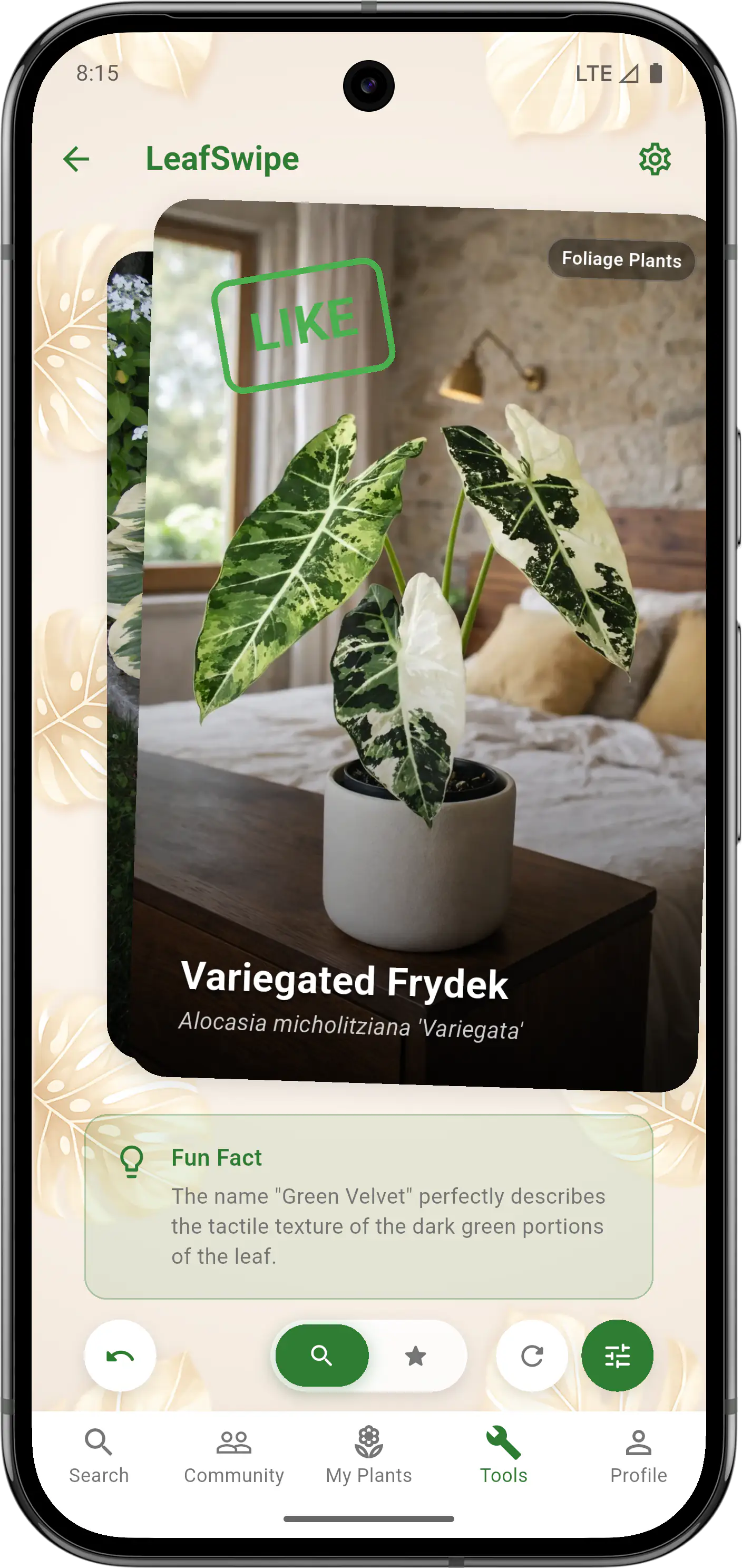
LeafSwipe
Find Plants That Fit Your Home and Routine
Use LeafSwipe to compare plants quickly, save your favorites, and choose options that match your light and time.
Find options quickly
Compare plant ideas in seconds when you want new options.
Pick plants that fit
Care previews help you choose plants that match your light and routine.
Save your favorites
Keep a short list so your next plant decision feels easier.



Frequently Asked Questions
The strongest pet-safe picks in this catalog are Spider Plant, Chinese Money Plant, Parlor Palm, Cast Iron Plant, and Boston Fern because all five are non-toxic to pets in the source data. Pick the option that fits your light, schedule, and room setup, because fit matters more than trends.
It depends on your plant and setup. Do not assume so. The safer rule is to use the catalog pet-safety field for each plant rather than broad plant-family shortcuts.
Start with non-toxic catalog picks, then still use smart placement so bored pets are not chewing leaves all day. A simple way to do this is to check light and soil moisture first, then track the result for 7 to 14 days.
Yes. Pet-safe only answers the toxicity question. You still need to match light, watering, and room size to the plant. Before deciding, check current light, soil moisture, and root condition so your next step is based on what is actually happening.
Plantology
Find Your Next Favorite Plant
Use LeafSwipe to discover and compare plants that fit your space, light, and daily routine.
- Find matching plants faster
- Compare care needs easily
- Save favorites for later